
The appetite for individuality has moved far beyond celebrity inspiration. Molly Mae Hague's oval solitaire may have ignited the conversation, yet actual distinction lives in the details that only a bespoke commission can deliver. In Hatton Garden, Britain's jewellery quarter, commissioning a ring is not a quick purchase but a measured collaboration between client and craft. The best Hatton Garden jeweller will not only guide you through a structured process that blends design intelligence, gemmological scrutiny, and traditional bench skills, but also provide the support and expertise you need to make informed decisions. The outcome is an heirloom with documented provenance that reflects your taste, your priorities, and your standards.
This step-by-step guide explains how to brief, evaluate, and approve each milestone with clarity. It shows where to invest for visible impact, how to validate quality with independent reports, and which technical decisions affect longevity and comfort. Expect candid advice on bespoke engagement ring budgets, timelines, and trade practices, as well as the practical differences between natural and lab-grown diamond options. The aim is simple. Replace guesswork with method. Replace imitation with authorship.
Step one: consultation and concept alignment
A productive commission starts with a precise conversation. Bring a shortlist of looks that speak to you —not to copy, but to map your preferences: oval or round. Sleek solitaire or refined trilogy. Yellow gold warmth or platinum clarity. Your jeweller will not only translate that input into a clear brief that balances aesthetics, lifestyle, and budget, but also ensure that your unique vision is at the heart of the design process, making you feel valued and integral to the creation of your bespoke ring.
At this stage, you should expect technical questions. Ring size tolerance. Bandwidth for comfort and proportion. Claw profile suited to the stone's shape. Your consultant will also outline the feasibility and risks, for example, how ultra-slim bands can compromise structural strength on larger stones. This is where early discipline prevents late compromise.
Pro tip: ask your jeweller to identify the two or three design levers that most affect look and longevity. For many clients, the levers are band thickness, head height, and claw design. Aligning those early accelerates the build.
Step two: gemstone strategy that serves the design
Great rings start with the right centre stone. Decide first what the design is meant to express, then choose the stone to support that vision. If you want limpid brightness in a clean, modern solitaire, pursue an Excellent cut with tight symmetry and polish. If you seek a softer, romantic mood, consider antique cuts or a lower colour paired with yellow gold.
Always insist on independent grading, for natural diamonds, which usually means a GIA certificate. For lab-grown diamonds, IGI is common, and GIA also grades them. Certification secures the 4Cs and confirms any fluorescence. Go beyond the headline grades. Ask for the table percentage, depth, crown and pavilion angles for round brilliants, and the girdle thickness for elongated shapes that require secure claws.
Prioritise cut. An Excellent or Ideal cut maximises light return and masks small compromises in colour or clarity. For value, consider the near-magic sizes just under a round number, for example, 0.90 to 0.99 carat or 1.90 to 1.99 carat. The visual difference is slight, while the price step can be significant.
Step three: CAD development and 3D verification
Your ideas become geometry in Computer-Aided Design. CAD is not a clip art exercise. It sets wall thicknesses, prong lengths, seat angles, and tolerances to fractions of a millimetre. Demand orthographic views and magnified close-ups of the head from multiple angles. Confirm that the stone's exact measurements have been loaded, not a generic template.
Once the CAD is approved, ask for a resin or wax model. This physical mock-up lets you evaluate finger height, balance, and edge crispness, which the goldsmith will later refine. Try the model on. Grip a handbag strap. Slide your hand into a coat pocket. Every day motions reveal whether the profile catches or the claws need softening.
Bold checks that matter: ensure the setting protects the stone's vulnerable points. For an oval diamond, confirm claw placement over the tips. For an emerald cut, confirm corner protection. Practical elegance is the goal.
Step four: casting and pre-setting preparation
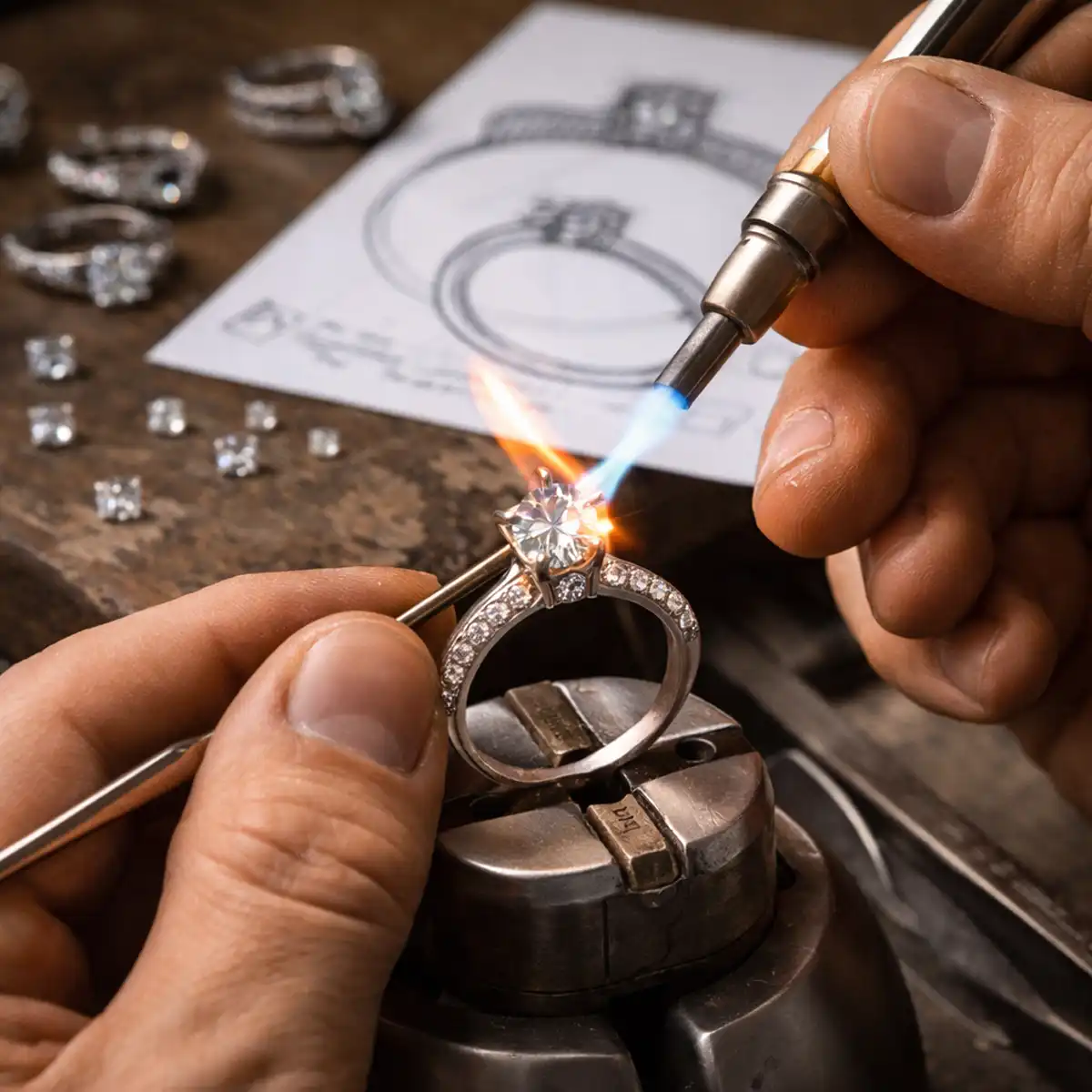
With a signed-off model, the piece moves to casting. The choice of metal depends on colour and function. Platinum engagement rings offer density, durability, and a white tone that disappears beneath a colourless diamond. 18ct yellow gold delivers warmth and an enduring colour that never needs plating. Two-tone builds combine both; for example, a yellow shank with a platinum head to keep white light from entering the stone.
After casting, the goldsmith removes the sprues, trues the geometry, and pre-polishes the structure. Seats are cut for the centre stone and any side diamonds—the preparation matters. Clean, consistent seats mean tighter stones, stronger claws, and better light performance. Poor preparation leads to overworked claws and future maintenance.
Step five: master setting for security and brilliance
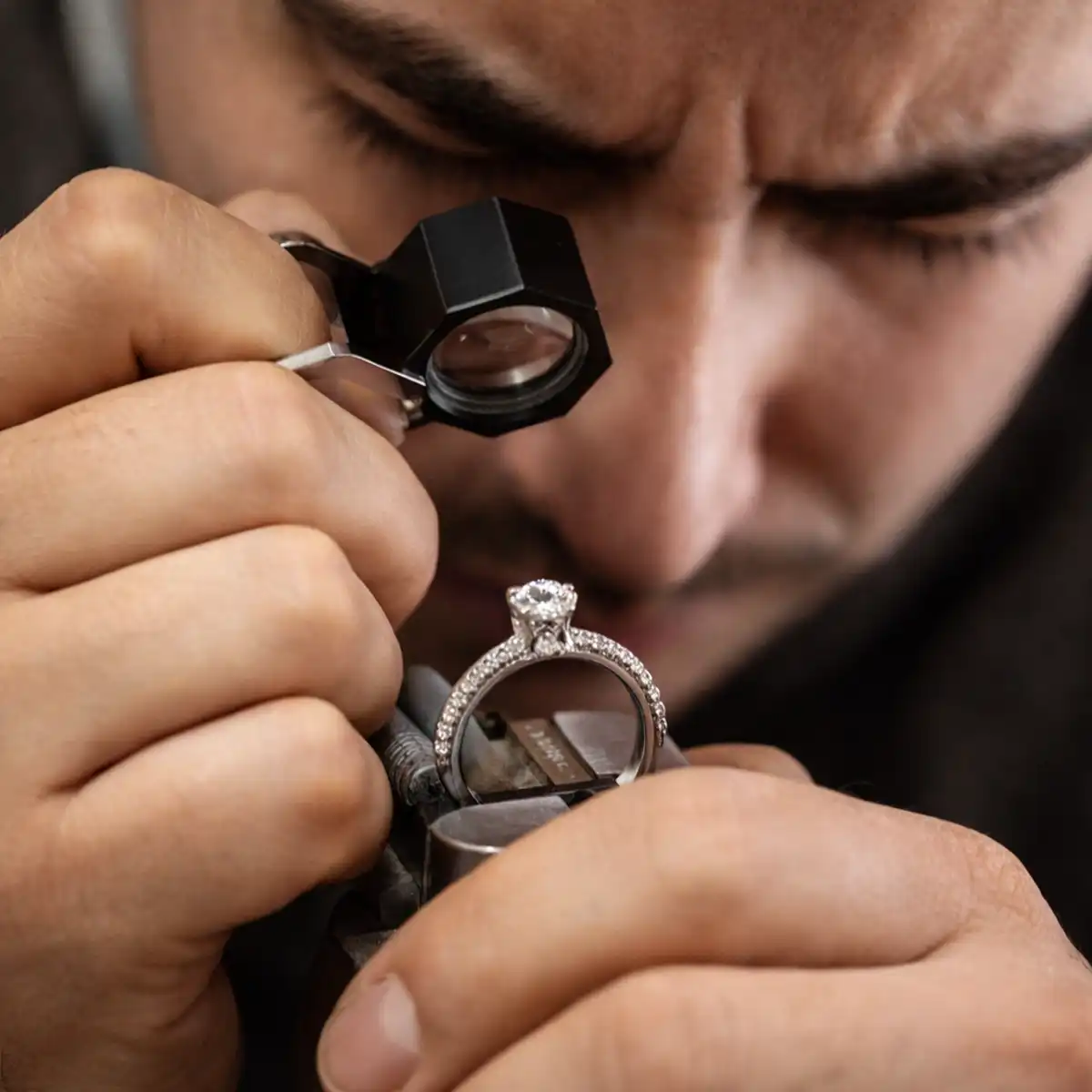
Stone setting is where finesse proves its value. For solitaires, four claws maximise light while six claws can emphasise roundness and security. For ovals and pears, claw placement must protect the points without visually crowding the outline. Pavé work demands crisp beads and even spacing to avoid dirt traps and dullness.
Discuss the setting style that suits your design language and lifestyle. Micro pavé can sparkle intensely yet requires thoughtful wear. Channel setting brings clean lines with robust protection. A hidden halo beneath the centre stone can add lift and scintillation without altering the face-up silhouette. None of these choices is generic. Each one changes how light moves through and around the ring.
Step six: hallmarking, finishing, and quality control
In the UK, hallmarking is a legal requirement for weights above a specific weight. Your ring will bear a sponsor's mark, fineness mark, and the London Assay Office mark. These stamps authenticate the metal's purity and origin. They also matter for insurance and resale.
After hallmarking, the workshop performs final assembly and polishing. Ask for a plain daylight inspection before the last polish to check symmetry, claw finesse, and any micro scratches. Then request a final review in mixed light to judge scintillation and contrast.
Fun fact: The leopard's head that marks the London Assay Office has appeared on precious metal since the 1300s, making it one of the longest-running quality marks in European trade.
Step seven: documentation, presentation, and aftercare
A professional handover includes more than a box. Expect original grading reports, a workshop appraisal that records metal, carat weights, and artistry, and a care plan. Insure the ring immediately at the documented replacement value. Schedule a check at 12 to 18 months to assess claws and polish. Regular care maintains the stone's appearance and protects it.
Aftercare also includes the re-sizing protocol. Agree on the approach before commissioning. Bands with intricate pavé may need a sizing bar to allow later adjustments without disturbing the diamonds.
Natural versus lab: How to choose with clarity
Both can be excellent. The decision rests on priorities. If legacy, rarity, and long-term value rank highest, a natural diamond remains the classic choice. If visual size, colour purity, and budget efficiency are leading, lab-grown diamonds deliver. Either way, the design and setting skills determine how spectacular the ring appears on the hand.
For natural stones, consider near colourless grades like G or H for balance against cost, especially if you favour yellow gold. For lab-grown, use the savings to secure top cut grades and invest in superior craftsmanship. Always disclose the stone type in the appraisal. Transparency is part of trust.
Optimising the proportion of how to make the centre stone sing
Face-up size depends on more than carat weight: diameter, depth, and the architecture of the setting influence perceived scale. Three proven levers increase presence without compromising integrity.
First, a slender band of 1.8 mm to 2.0 mm creates contrast that amplifies the stone. Second, low-colour metals near the pavilion prevent warm reflections from entering a colourless diamond. Third, a balanced head height allows light entry while reducing catch points on clothing. Together, these choices frame the stone and keep it dominant.
For elongated shapes, keep length-to-width ratios in mind. Ovals around 1.35 to 1.45 often look elegant and balanced. Pears with a centred tip and even shoulders avoid distortion. Always view in motion. The best proportion looks lively from every angle.
Budget architecture on where to spend and where to save
Spend on the centre stone's cut and on bench time. Save by choosing a near magic weight below a headline carat, by selecting near colourless over colourless, and by simplifying decorative complexity where it adds cost but little visual benefit.
A classic solitaire directs more budget to the stone. A trilogy balances spending between the centre and the sides. Micro pavé adds labour hours that your love of the effect should justify. If funds are finite, choose perfect basics over elaborate extras. A clean, impeccably made ring outperforms a busy ring with average execution every time.
To protect the budget, ask for a line item summary that separates centre stone, metal and melee, and labour. Clarity on pricing supports better decisions and reduces surprises.
Style language choosing a setting that suits your life
Design should harmonise with the daily routine. If you work with your hands or in tight sleeves, consider lower heads and protected profiles, such as a bezel or semi-bezel. If you love sparkle and do not mind careful wear, bright cut pavé offers continuous light. Vintage cues can be integrated with restraint. Millegrain edges, hand engraving, and refined under galleries add character without excess height.
Think about wedding band pairing. If you want a flush fit, ask for a shaped head or a raised basket. If you like separation, a gentle gap can showcase each band. Planning both saves revision later.
Ethics and sourcing a confident modern standard
Responsible practice is now expected. Ask for recycled or responsibly sourced precious metals. For diamonds, request supply chain transparency appropriate to the stone type. Natural diamonds should be sourced through reputable channels with current assurance. Lab-grown diamond choices should include information on growth method and post-growth treatments. This is not marketing. It is documentation that aligns luxury with values.
Frequently asked commissioning questions answered
How long does a bespoke ring take
Typical timelines run 5 to 7 weeks from CAD sign-off to collection. Complex pavé, hand engraving, or sourcing rare shapes can add time. Build in Slack if planning around a proposal date.
Can a design be adjusted once cast
Minor adjustments are possible, yet significant changes often require a remake. That is why the CAD and resin model stage is vital. Spend time there.
What insurance is appropriate
Insure at the full replacement value stated on the workshop appraisal. Confirm accidental damage and loss cover. Photograph the ring on collection for records.
How often should claws be checked?
A yearly check is prudent. High wear or snagging incidents merit an immediate inspection.
Case study from idea to heirloom
A client loves the look of a celebrity oval solitaire yet wants a personal mood. The brief becomes a 1.80 mm yellow gold band with a platinum head holding a 1.70 carat oval graded Excellent cut and H colour with VS2 clarity. CAD refines a slim basket that lowers the stone for comfort. A resin model confirms height under a winter glove. The goldsmith casts the shank in 18ct yellow gold, then casts the platinum head, and prepares seats that cradle the oval's tips. The setter crafts four refined claws and adds a discreet hidden halo beneath the girdle. Hallmarking completes the legal record. In hand, the ring is bright, balanced, and easy to wear. It is inspired by a trend, yet owned by its wearer.
Aftercare that preserves brilliance
Rinse in warm water with mild soap and a soft brush once a week. Avoid ultrasonic cleaners for pavé unless your jeweller approves them. Remove your ring for the gym, gardening, and contact sports. Store in a soft pouch when not worn. These simple habits protect polish and setting integrity.
A professional clean and check returns the ring to showroom sparkle. Schedule maintenance alongside your annual insurance review. Good habits keep love stories looking their best.
Conclusion authorship over imitation
A bespoke commission in Hatton Garden is not a shortcut to trend. It is a process that turns preference into proportion and metal into meaning. With disciplined steps, independent grading, and meticulous bench work, your bespoke engagement ring becomes a precise fit for your hand and your life. When concept, stone, and setting speak the same language, the result is calm, radiant confidence. As the saying goes, measure twice, cut once. In fine jewellery, that care is the difference between a look and a legacy.