
Warm Elegance, Earthy Origins, and a Rising Place in Fine Jewellery
In the shifting landscape of modern engagement rings, one subtle trend is emerging with quiet strength. Once overshadowed by their colourless counterparts, champagne diamonds have taken a bold step forward. These natural stones, with hues ranging from pale golden straw to deep brandy, offer something rarely found in high-end jewellery: warmth. Not just warmth in tone, but in narrative, provenance, and personal expression.
While many couples still gravitate towards the icy precision of white diamonds, a new generation is seeking jewellery that tells a richer, more individual story. For those attuned to nature's variation and emotional resonance, the champagne diamond ring offers a striking departure from the traditional. More than a passing aesthetic, it represents a deeper alignment with organic beauty and earthy elegance.
This article explores the origins, science, market evolution, and selection criteria behind champagne diamond rings. It aims to demystify what sets them apart and why they are fast becoming a compelling option for today's most thoughtful buyers.
What Makes a Champagne Diamond?
At the core of the champagne diamond's appeal is its colour — an organic, rich expression of nature's geological artistry. Unlike white diamonds, whose value rests in their lack of pigment, champagne diamonds are celebrated precisely for their deep golden-brown radiance.
Their colour spectrum runs from faint honey to vivid cognac, encompassing a wide range of browns often accompanied by yellow, orange, or reddish undertones. The term "champagne" is not a scientific classification but rather a commercial descriptor. It evokes celebration and opulence, aligning these earthy stones with a luxury sensibility.
The Natural Origins of Colour
The warm tone of a champagne diamond is not added or engineered — it is forged deep within the Earth under extreme pressure and heat. Two natural phenomena are chiefly responsible.
First is nitrogen incorporation, where nitrogen atoms become embedded within the diamond's carbon structure during formation. The more nitrogen present, the deeper the brown and yellow hues that develop.
Second is plastic deformation, a structural stress that occurs when the crystal lattice is compressed and distorted. This grain alters the way light is absorbed, creating brown tones that would never appear in a perfect crystal.
Far from being seen as flaws, these characteristics form the essence of the champagne diamond. They capture the tension between geological imperfection and organic beauty, challenging the old narrative that purity equates to value.
Fun Fact: The term "champagne diamond" was born not from gemmology but from marketing. It was popularised by Rio Tinto in the 1980s to reposition brown diamonds as luxurious rather than industrial.
Champagne, Cognac, and Chocolate: Decoding the Terms
The names used to describe these diamonds — champagne, cognac, chocolate- may sound glamorous, but they carry no formal gemmological weight. They are commercial inventions designed to enhance appeal.
- Champagne diamonds typically refer to light to medium brown stones with golden or yellowish undertones.
- Cognac diamonds are darker, richer, and often show hints of red or orange. These stones sit at the deeper end of the colour scale.
- Chocolate Diamonds® are a proprietary classification used exclusively by the American jeweller Le Vian. These are carefully selected stones that meet their internal grading standards and branding criteria.
For official grading, institutions such as the Gemological Institute of America (GIA) use neutral terminology. A champagne diamond might be described on a GIA certificate as "Fancy Light Yellow Brown", "Fancy Yellowish Brown", or simply "Light Brown", depending on its depth of tone and secondary hues.
The Marketing Reinvention of Brown Diamonds
Champagne diamonds were once the underdogs of the diamond industry. Prior to the late twentieth century, brown diamonds were commonly dismissed as unfit for jewellery and relegated to industrial use. Their hardness made them ideal for cutting tools, but their colour rendered them commercially unattractive.
This perception changed dramatically with the opening of the Argyle Diamond Mine in Western Australia in the early 1980s. Operated by Rio Tinto, the mine produced an unusually high percentage of brown diamonds — over 80 per cent of its output. To overcome the limited market for these stones, the company launched a radical repositioning campaign.
Rather than presenting the diamonds as flawed, they reframed them as exotic, luxurious, and desirable. By borrowing the language of indulgence, champagne, and cognac, they redefined public perception. The transformation was not only successful but historic. Champagne diamonds soon became a feature in fashion-forward jewellery collections and gained popularity across Europe and North America.
The Enduring Appeal of the Argyle Mine
The Argyle mine's significance extends beyond its marketing brilliance. It is also legendary for producing the world's rarest coloured diamonds, including the coveted pinks and reds. As a result, all diamonds of Argyle provenance, including its champagne offerings, have acquired an enhanced status in the market.
In 2020, the mine officially closed after 37 years, having produced more than 865 million carats of rough diamonds. The closure marked a turning point. With no new stones coming from Argyle, those already in circulation have become finite assets. The concept of provenance now plays a crucial role in valuation.
Buyers today place growing emphasis on traceability and history. A champagne diamond with documented Argyle origins now carries what some in the trade refer to as the "Argyle halo effect" — a premium driven by the mine's legacy and rarity.
How Champagne Diamonds Are Graded
For anyone considering the purchase of a champagne diamond ring, a solid understanding of grading principles is essential. The four Cs — Colour, Clarity, Cut, and Carat — still apply, but with different emphases compared to colourless diamonds.
Colour: The Centrepiece
Colour is the defining feature of any champagne diamond. Gemologists assess three dimensions:
- Hue: The basic shade, often brown with secondary tones of yellow, orange, or pink.
- Tone: The lightness or darkness of the colour.
- Saturation: The intensity of the hue.
The GIA uses two grading approaches. Lightly coloured brown diamonds are assessed using the D-to-Z colour scale. More deeply coloured stones are evaluated with the Fancy Colour system, which includes descriptors like "Fancy Light Brown" or "Fancy Dark Yellowish Brown".
The now-defunct Argyle mine also had its own consumer-friendly scale, ranging from C1 to C7. For example:
- C1–C2: Light Champagne (approx. GIA N–V range)
- C3–C4: Medium Champagne (W–Z range)
- C5–C6: Dark Champagne (Fancy Light to Fancy Brown)
- C7: Cognac (Fancy Dark Brown)
This system, though not official, remains popular in retail contexts and is often used in tandem with GIA certification.
Clarity: Often an Advantage
Unlike white diamonds, where inclusions are more visible, champagne diamonds often mask internal characteristics due to their depth of colour. This makes it easier to find eye-clean stones even at lower clarity grades like SI1 or SI2.
This hidden advantage allows buyers to prioritise colour and cut — the features that have the most visual impact — while potentially saving on clarity without sacrificing appearance.
Cut: Where Beauty Is Made
A well-cut champagne diamond will display its colour evenly and sparkle brilliantly. The cut determines how light is reflected inside the stone, and thus, how warm and lively the diamond appears.
While GIA offers standardised cut grades for round colourless diamonds, this system does not apply broadly to coloured stones. Instead, cutters focus on enhancing saturation and face-up appeal. Buyers should inspect a stone in person, where possible, looking for symmetry, proportion, and brilliance.
Carat: Accessible Luxury
One of the most appealing aspects of champagne diamonds is their relative affordability. A 1-carat champagne diamond of high visual quality can cost less than half the price of a comparable white diamond. This makes them attractive to buyers who want size, uniqueness, and quality without the premium pricing of traditional colourless gems.
Rather than chasing size alone, a smarter approach is to balance the budget toward the strongest colour and best cut possible. These qualities will have a greater influence on overall beauty and satisfaction.
How to Choose the Perfect Champagne Diamond Ring
Selecting the right ring setting for a champagne diamond is about more than design preference — it is about creating harmony between metal, cut, and colour. These rings offer remarkable versatility, whether you favour a timeless solitaire or a richly embellished vintage look.
Choosing the Right Metal
The metal you select for the band significantly influences how the diamond's colour appears. It can either blend with or highlight the tone of the stone.
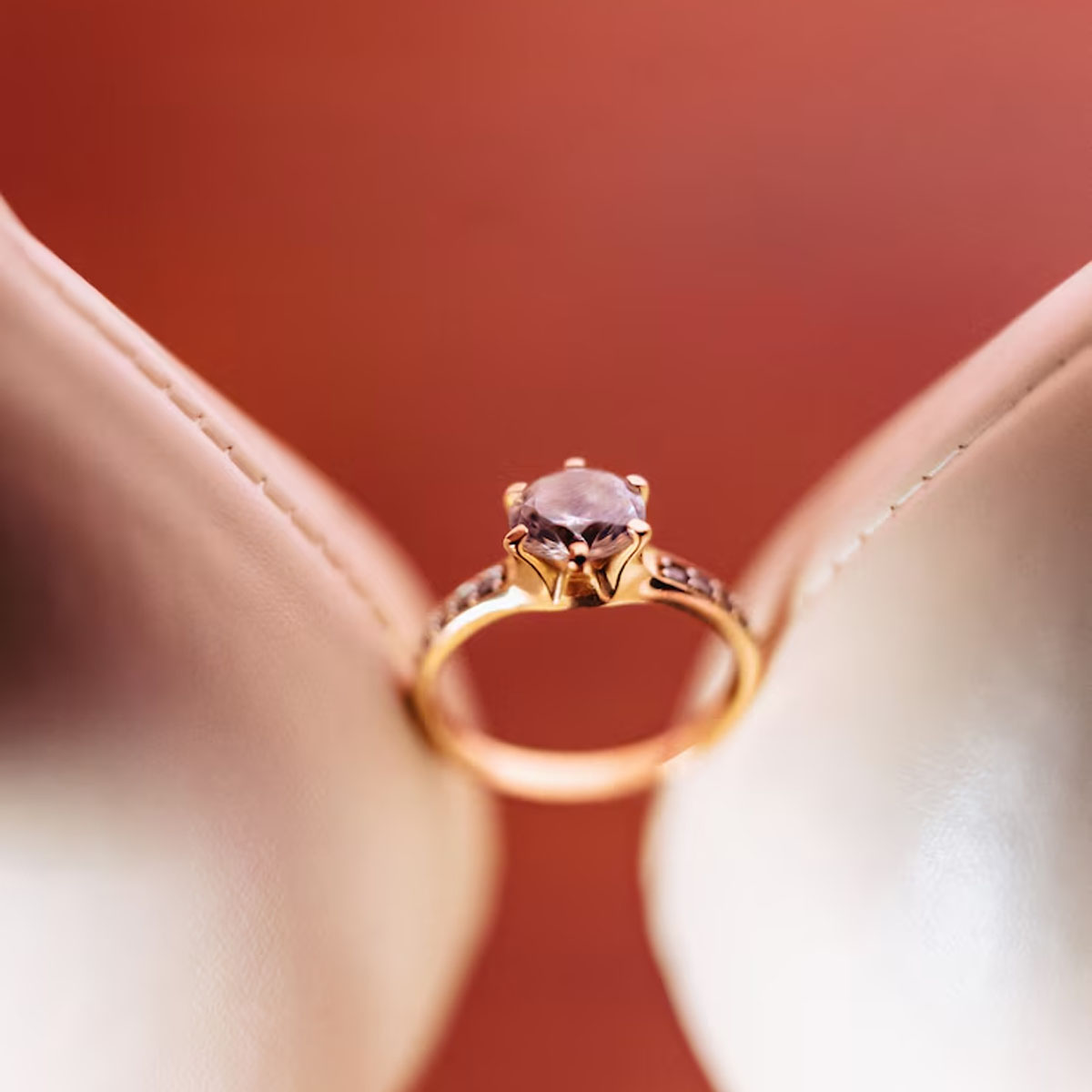
- Yellow or rose gold are classic pairings. These warm metals complement champagne diamonds perfectly, enhancing their golden undertones and giving the entire piece a unified, radiant warmth. This tone-on-tone effect often appeals to those who want a natural, romantic aesthetic.
- White gold and platinum, on the other hand, create a modern contrast. By setting a warm-toned diamond against a cool-hued metal, the depth and intensity of the stone become more pronounced. This style works especially well in contemporary or architectural designs, where contrast is part of the visual impact.
There is no universally superior choice — the key is to find a combination that suits the wearer's complexion, wardrobe, and taste.
Popular Setting Styles
From minimalist designs to complex settings, the adaptability of champagne diamonds opens up a wide design vocabulary. The following are among the most popular and effective:
- Solitaire: Clean, simple, and refined, the solitaire focuses all attention on the central stone. A champagne diamond set alone on a band can be breathtaking, especially when paired with a well-matched metal.
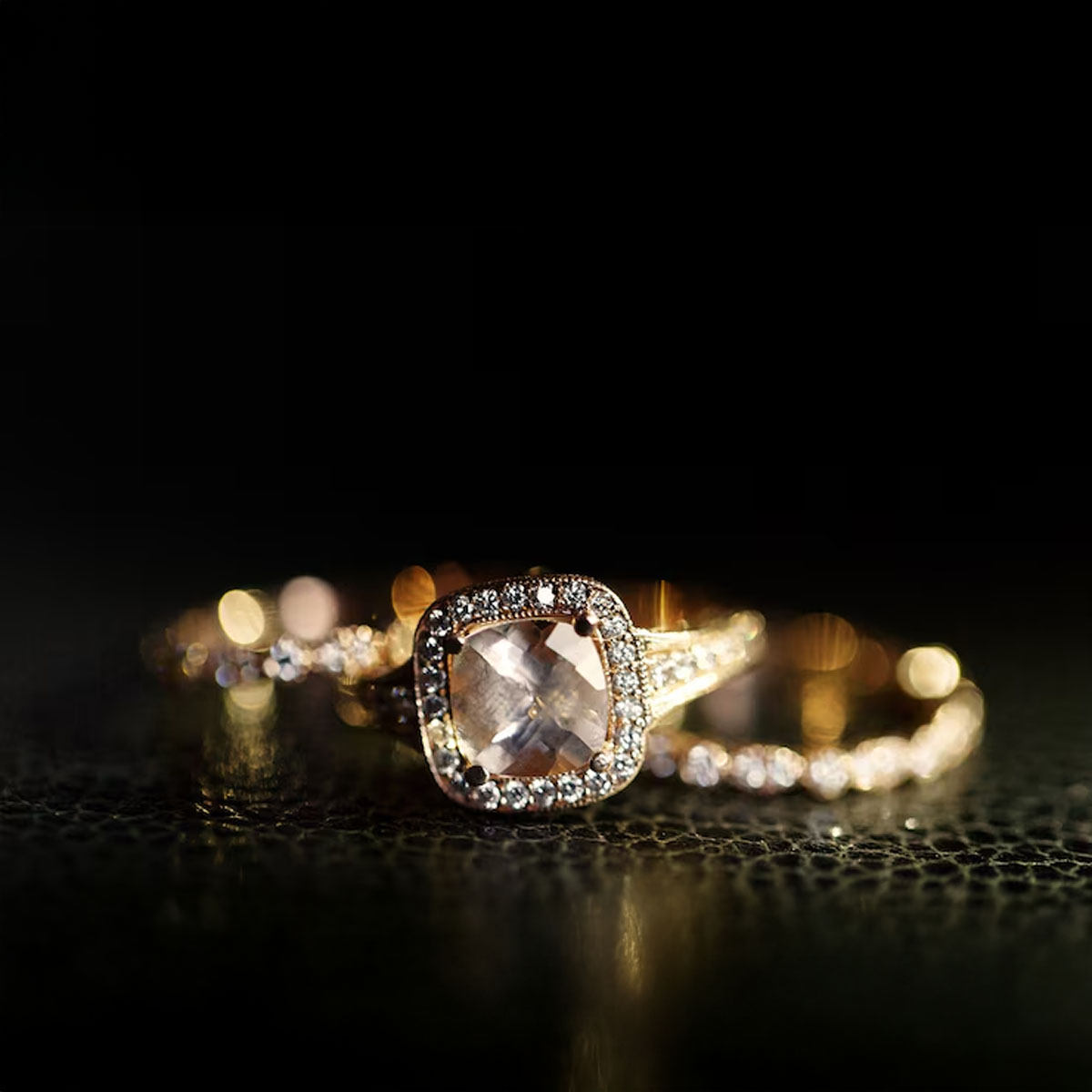
- Halo: Surrounding the main stone with small white diamonds creates a luminous frame that intensifies the champagne tone. This setting enhances sparkle and adds a sense of vintage glamour.
- Trilogy: Featuring three stones, usually with a central champagne diamond flanked by two colourless ones, this design symbolises a couple's past, present, and future. The contrast between the centre and the sides adds richness and emotional depth.
- Vintage and antique-inspired: Intricate filigree, milgrain details, and geometric Art Deco styles all lend themselves beautifully to the warm tones of a champagne stone. These styles offer a sense of timeless character and heirloom quality.
The Value of a Bespoke Piece
For many buyers, especially those seeking a deep connection to the piece, commissioning a bespoke ring is the ultimate expression of meaning and individuality.
In the UK, particularly in Hatton Garden, couples can work directly with jewellers to source their ideal champagne diamond and design a setting that aligns with their vision. From initial sketches to the final polish, the process allows for full creative input while maintaining expert guidance. This is not only about personalisation but about craftsmanship — each decision contributes to the balance, wearability, and beauty of the final result.
Natural Versus Treated Versus Lab-Grown
As demand for champagne diamond engagement rings grows, so too does the variety of diamonds on offer. Buyers must understand what distinguishes natural from treated or synthetic stones, especially when investing in quality.
Naturally Formed Champagne Diamonds
True champagne diamonds occur naturally, their colour emerging from the unique mix of nitrogen presence and lattice distortion. These stones require no colour enhancements and represent a direct link to Earth's geological history. For many, this authenticity is a central part of their appeal.
Treated Stones
Lower-quality brown diamonds can be enhanced through high-pressure, high-temperature (HPHT) treatment, which aims to reduce the visibility of inclusions or alter the stone's colour. While this treatment is permanent and widely accepted, other interventions, such as surface coatings, are more fragile and may degrade over time.
Any such treatment must be disclosed by the seller. This is where certification from an independent body becomes crucial. The GIA, for instance, clearly states whether a diamond has undergone treatment, ensuring full transparency.
Lab-Grown Challenges
Unlike white diamonds, champagne tones are not easily reproduced in the lab. The complex interplay of nitrogen and structural strain is difficult to simulate consistently. As a result, lab-grown champagne diamonds remain uncommon. While they may appear on the market in time, current offerings are limited and lack the emotional weight or natural provenance of their mined counterparts.
For buyers seeking both visual beauty and a sense of rarity, a natural champagne diamond offers a far more compelling story.
Where to Buy Champagne Diamond Rings in the UK
The UK jewellery market offers a variety of entry points for those seeking a champagne diamond ring, from artisan workshops and luxury houses to modern online retailers.
Hatton Garden: The Centre of British Craftsmanship
There is no better place to begin than Hatton Garden, London's iconic jewellery district. This historic area is home to master jewellers, diamond merchants, and designers who specialise in sourcing and setting unique stones.
At workshops such as Holts Gems or Hatton Garden Diamond, buyers can examine GIA-certified stones in person and collaborate on a completely bespoke design. The area's long tradition of ethical sourcing also means that clients benefit from transparent supply chains and the safeguards of the Kimberley Process.
For couples seeking a handcrafted, meaningful engagement ring, Hatton Garden offers a blend of tradition, skill, and personal service that is unmatched.
High Street and Online Retailers
For those preferring to shop online or on the high street, several retailers offer customisable champagne diamond designs with wider accessibility.
- Diamonds Factory: Known for its online configurator, this retailer allows customers to design rings using certified champagne diamonds, choosing from a range of settings and metals. Their platform is particularly popular with those seeking yellow gold rings.
- TJC (The Jewellery Channel): TJC provides a wide range of jewellery pieces, many of which feature affordable champagne diamonds. Some collections even include stones from the now-closed Argyle mine, adding provenance at accessible price points.
Heritage Luxury: The Final Tier
For those seeking an elite experience, historic British jewellers such as Boodles provide exceptional service, design pedigree, and access to the highest quality stones.
Boodles, founded in 1798, is known for its commitment to sourcing rare gems and producing one-of-a-kind pieces. While best known for Argyle pinks, the brand's design team is well-equipped to create spectacular rings using the finest champagne diamonds. For collectors or those marking a major life milestone, this level of personal attention and heritage craftsmanship is hard to surpass.
Why Champagne Diamonds Are More Than a Trend
The rise of the champagne diamond is not a matter of fleeting fashion. It signals a broader shift in how people approach fine jewellery — one that values natural variation, narrative richness, and personal expression.
These stones bring more than sparkle. They carry the weight of geological history, marketing ingenuity, and a human desire to own something singular. Their warmth speaks to the emotional resonance many seek in engagement rings today — a tactile symbol of something enduring, imperfect, and real.
Unlike mass-produced lab stones or commoditised colourless diamonds, a well-chosen champagne diamond stands apart. It resists comparison because it was never meant to conform.
In that sense, it becomes more than a ring. It becomes a reflection of values.
Conclusion:
From deep within the Earth's crust to the jewellery boutiques of Hatton Garden, the journey of the champagne diamond ring has been one of rediscovery and reinvention. Its rich hues, once dismissed, now signify thoughtful luxury. Its provenance, particularly from Argyle, elevates it to a collector's category. And its adaptability across metals and settings makes it suitable for almost any aesthetic — whether classic, modern, or vintage.
For today's buyer, it offers more than sparkle. It offers a statement. A champagne diamond ring is a personal declaration of warmth, character, and intention. In a world increasingly saturated with sameness, it celebrates the rare, the nuanced, and the authentically beautiful.