
The question that separates an informed engagement ring buyer from one who will overspend is not how much to budget but what a specific budget actually delivers at the Hatton Garden price structure. A buyer who walks into a workshop with £5,000 and no frame of reference has no way to evaluate whether the stone being offered represents fair value or a poor trade-off. A buyer who arrives understanding what £5,000 structurally buys at the compressed-margin pricing that operates in the quarter can assess every offer against an internal benchmark and commit or decline with confidence. This article sets out what each of the four most common budget bands actually delivers in Hatton Garden, and where the 4Cs trade-offs sit at each level.
Hatton Garden in EC1N, between Chancery Lane on the Central line and Farringdon on the Elizabeth line,e operates on a pricing structure that sits materially below mainstream retail for reasons covered separately. For this buyer guide, what matters is the practical consequence: a given budget in Hatton Garden will typically deliver either a larger stone at the same specification or a higher-specification stone at the same size, relative to an equivalent purchase from a chain retailer on the high street. The bands set out below reflect current market conditions in early 2026 and should be treated as indicative rather than fixed quotes, because metal and diamond prices move continuously, and any specific figure requires confirmation with the jeweller at the point of purchase. Walking from Greville Street to the northern end of Hatton Garden and asking three independent workshops for written quotes on the same specification is the buyer’s most reliable calibration exercise, and it costs nothing.
How Budget Breaks Down Across A Complete Engagement Ring
Before looking at what each budget band delivers, a buyer should understand how the total cost of an engagement ring breaks down across its components. The typical split for a commissioned ring with a centre stone of 0.50 carat or above runs approximately as follows. The centre stone typically accounts for 55% to 75% of the total ring cost, depending on the specification and size. The setting metal accounts for 8% to 15%, depending on whether the ring is in 18ct gold or platinum and the weight of metal required by the design. Accent stones, where present, account for 5% to 15,% depending on density and quality. Workshop labour, ur including setting, finishing, and hallmarking, accounts for 10% to 20% of the total, reflecting the craft content of the piece.
These percentages shift meaningfully with design complexity. A halo setting with micro-pavé accent work across the shoulders carries more labour and accent stone cost than a simple four-claw solitaire, which pushes the metal and labour share higher and the centre stone share lower for a given total budget. A bezel setting in platinum uses more metal than a claw setting in 18ct white gold, shifting the metal share upward. A buyer who understands these proportions can read a quote and identify whether the jeweller has allocated the budget sensibly for the chosen design, or whether the split is unusual in a way that deserves a question.
The £3,000 To £5,000 Band
At £3,000 to £5,000 total budget for a commissioned engagement ring in Hatton Garden, the buyer is working in the entry range for serious bespoke work. The 4Cs trade-offs at this band typically produce a centre stone in the 0.50 to 0.70 carat range for a natural diamond, or 0.90 to 1.20 carats for a lab-grown diamond, at commercially sensible colour and clarity specifications.
For a natural diamond at this budget, the trade approach is to prioritise cut above all else. An Excellent-cut 0.60 carat G-colour SI1 stone will look measurably more beautiful than a 0.70 carat J-colour VS2 with Good cut, despite the latter appearing superior on paper. Cut drives brightness and scintillation in ways colour and clarity do not, and a Hatton Garden jeweller working within this budget will typically steer the buyer toward the best-cut stone the specification allows.
For a lab-grown diamond at this budget, the carat weight available increases substantially. A 1.00 carat Excellent-cut F-colour VS1 lab-grown stone typically sits within the £3,000 to £5,000 total ring budget,dget including a simple 18ct gold solitaire setting. For buyers comfortable with lab-grown, this band delivers a visually substantial ring at a specification that would require a significantly higher budget for a natural diamond. Natural remains the default frame for most Hatton Garden bridal buyers, and the secondary market value distinction between natural and lab-grown is a legitimate consideration at this price point, where the stone represents a substantial share of the buyer’s savings.
The setting at this budget band is typically a four-claw solitaire or a simple three-stone arrangement in 18ct gold. Platinum adds 15% to 25% to the setting cost and is usually reserved for higher bands within this budget unless the buyer specifically prioritises it. A single solitaire with a plain shank and no accent stones is the most common outcome at £3,000 to £5,000 and remains a classical and enduring choice.
The £5,000 To £10,000 Band
At £5,000 to £10,00,0 the buyer moves into the commercial-strength band for bespoke Hatton Garden work. Centre stone options broaden substantially, and the trade-offs become more nuanced. A natural diamond in this band typically sits in the 0.70 to 1.20 carat range at Excellent cut and commercially strong colour and clarity. A lab-grown diamond at the same budget sits in the 1.50 to 2.50 carat range at equivalent specifications.
For a natural diamond, the 1.00 carat threshold carries a meaningful pricing premium in the current market, with stones at 0.90 carat trading measurably below 1.00 carat at otherwise identical specifications. A buyer prepared to accept a 0.90 carat stone visually indistinguishable from 1.00 carat at arm’s length can redirect the premium toward better cut, colour, or clarity. A 0.90 carat Excellent-cut F-colour VS2 will often fall at a lower price than a 1.00 carat Very-Good-cut H-colour SI1, with the smaller stone delivering superior light performance in person. This kind of weight-threshold arbitrage is available at every major carat boundary and is one of the specific techniques experienced Hatton Garden jewellers use to optimise a buyer’s budget.
Setting options broaden significantly in this band. Platinum becomes commercially sensible for buyers who want the durability and hypoallergenic properties it offers. Halo settings with accent diamonds, three-stone configurations with pear or marquise side stones, and fitted wedding bands for the matching ceremony become realistic rather than aspirational. Bespoke commissions at this band typically run 6 to 10 weeks from design approval to collection in Hatton Garden, with more complex designs involving specific sourced stones sometimes extending that range.
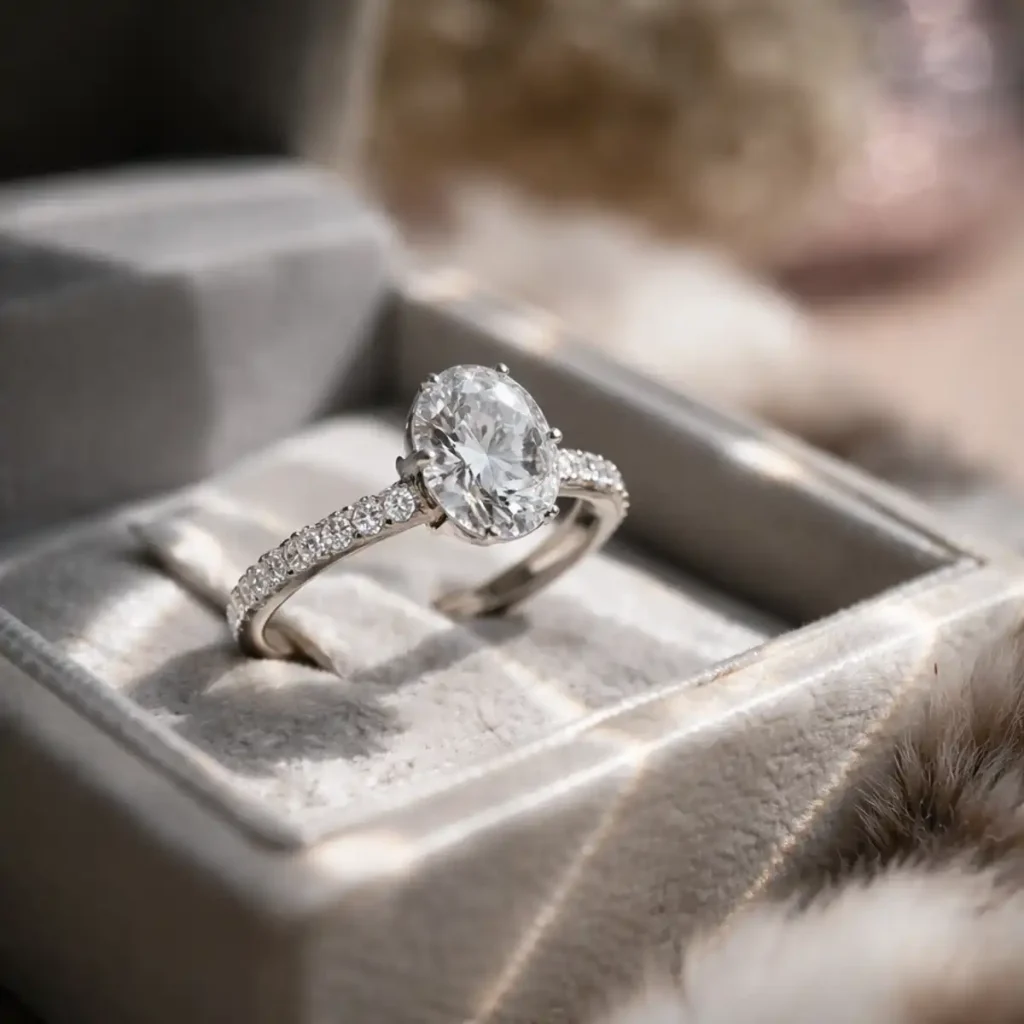
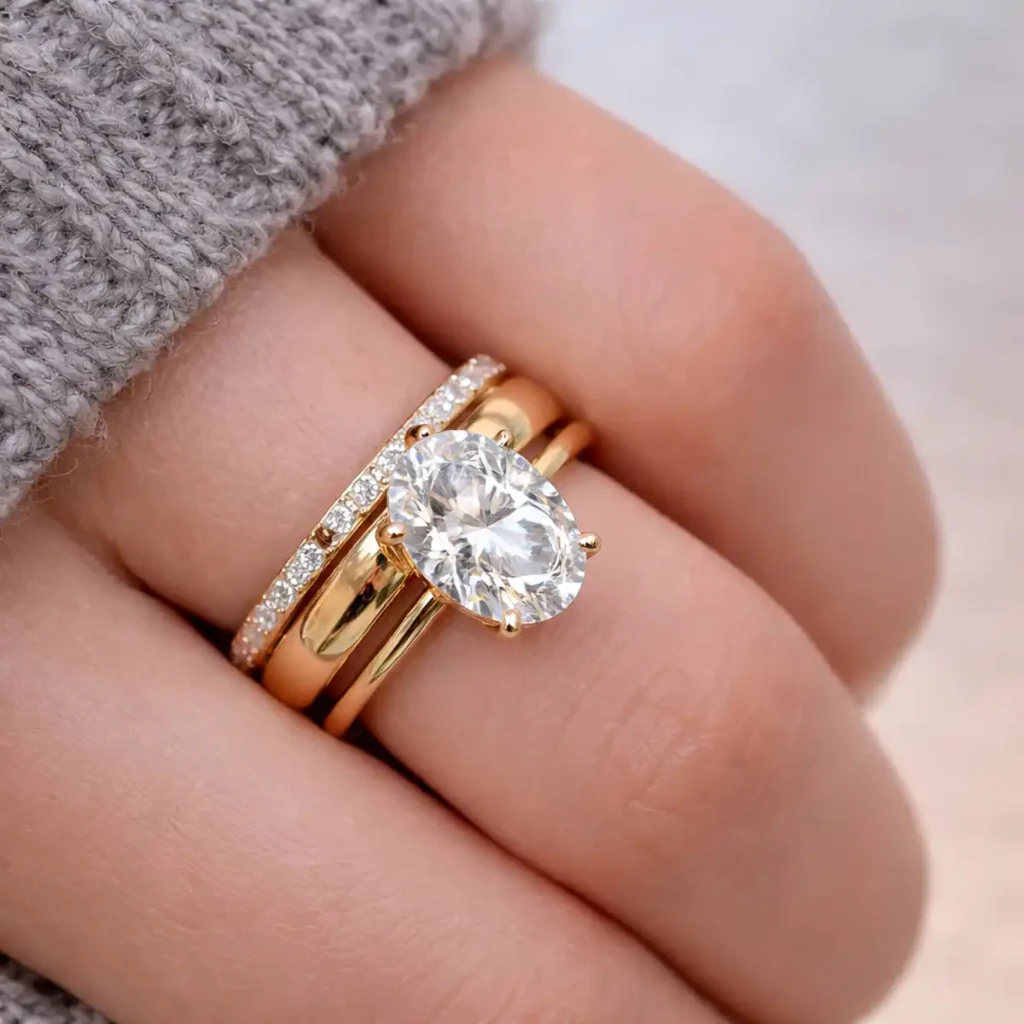
Fun fact: The solitaire engagement ring accounted for 47% of UK engagement ring sales in 2024, a meaningful increase over the previous year and a reflection of current bridal preferences toward simplicity and the visual prominence of the centre stone, which positions the £5,000 to £10,000 band as the most competitive band for Hatton Garden solitaire commissions.
The £10,000 To £20,000 Band
At £10,000 to £20,000, the buyer enters the range where truly distinctive bespoke pieces become accessible. Natural diamond centre stones move into the 1.20 to 2.00 carat range at high specifications, or smaller stones at premium specifications,s including D-to-F colourless colour grades and Internally Flawless to VVS2 clarity. Lab-grown options at this budget extend into the 3 t5-carat range at any specification.
The trade-offs at this band shift from purely optimising the 4Cs toward design complexity and stone character. A 1.50 carat Excellent-cut H-colour VS1 natural diamond at this budget leaves meaningful room for a complex setting with detailed gallery work, diamond-set shoulders, and a matching fitted wedding band produced as part of the same commission. Alternatively, a 1.00 carat D-colour Flawless stone with a simple classical setting consumes most of the budget and delivers a ring that reads as premium on paper while appearing visually similar to a ring costing meaningfully less in the same setting style.
This is the band where coloured stones become competitive alternatives to diamonds. A 2-carat Ceylon sapphire with a reliable origin report from Gübelin or SSEF, set in platinum with a diamond halo, sits comfortably within this budget and produces a piece with distinctive visual character that no diamond at the same budget can match. A 2-carat Colombian emerald, similarly certified and set, enters the same consideration. Hatton Garden is one of the few UK locations where these comparative choices can be tested directly against each other in person, because the trade depth in both diamond and coloured stone is concentrated in the quarter.
The £20,000 and Above Band
At £20,000 and above, the buyer operates in the premium band where specification becomes a matter of connoisseurship rather than commercial optimisation. Natural diamond centre stones at 2 carats and above at D-to-F colour and VVS2-to-Internally-Flawless clarity become the commercial standard, with fancy colour diamonds and exceptionally rare specifications entering the consideration set. Unheated Burmese rubies, Kashmir sapphire,s where available, and exceptional Colombian emeralds with strong provenance become accessible at this band.
The trade-offs at this level are different in kind. A buyer with a £25,000 budget can acquire either a mathematically optimised natural diamond at a predictable specification, or a coloured stone of genuine rarity with specific provenance and historical documentation. The former is more liquid in future resale; the latter carries greater intrinsic distinction. Neither is superior, and experienced Hatton Garden dealers working at this level will present both paths transparently rather than steering the buyer toward the option that suits their own inventory.
Setting at this band becomes a vehicle for the design’s own authority rather than a constraint on the centre stone. Platinum is standard. Hand-engraved galleries, period-reference motifs, and detailed pavé or micro-pavé work across complex gallery structures become realistic. A matching fitted wedding band produced in parallel as part of the commission is standard practice. Bespoke commission timelines at this band frequently extend to 10 to 16 weeks, reflecting both stone sourcing time and the additional bench hours the piece requires.
Where The Budget Should Not Be Spent
Several cost items at every budget band fall into the category of charges that deliver no visible value and should be questioned. Certificate duplication, where a jeweller charges for providing the GIA or IGI certification that comes with the stone at cost, is an unusual practice and should be flagged. Setting fees disproportionate to the setting complexity indicates either an unusual design or opaque pricing that deserves a question. Metal charges that exceed 20% of the total ring cost on a simple setting suggest either a heavy design that the buyer may not have appreciated from the quote or a pricing approach that the buyer should benchmark against other Hatton Garden quotes.
Insurance valuations prepared by the selling jeweller are commonly included with the purchase at no additional cost and should not be charged separately. Independent insurance valuations from a registered valuer are a separate purchase entirely, priced at £75 to £250 per piece, and are the valuations insurers typically require for policy purposes. A jeweller who presents their own valuation as the document an insurer will accept is not wrong, but the buyer should verify with their insurer before relying on it as the sole documentation.
What A Hatton Garden Buyer Should Actually Do
The single most useful discipline a buyer can apply when approaching Hatton Garden with a budget in mind is this. Write the budget down before the first consultation, share it with the first jeweller openly, and ask what specification and design options are realistically available at that level. A jeweller who engages with the budget question directly and produces a practical range of options within it is a jeweller worth commissioning from. A jeweller who deflects the budget conversation toward inspiration or emotional framing before specifying what the budget actually delivers is a jeweller who has not committed to working within it.
Collect written quotes from 2 or 3 Hatton Garden workshops for the same target specification before committing. The quotes should itemise the centre stone specification with certification details, the metal type and weight, the accent stones where present, the setting and finishing labour, and the hallmarking arrangement. A quote that provides this level of detail can be compared against other quotes meaningfully. A quote that provides only a total figure cannot, and the buyer should ask for the details before proceeding. Bespoke commissions at any budget band typically take 6 to 10 weeks from design approval to collection, with longer timelines at the premium end. Allow a clear 3-month buffer from first consultation to proposal date to accommodate the specification decision, the design iteration, and the commission production without pressure.