
The couple who walk into a Hatton Garden workshop in 2026, with ethical sourcing at the top of their priorities, is no longer unusual. They are increasingly the typical bridal buyer, and the questions they arrive with are sharper than the questions bridal buyers asked five years ago. ” Conflict-free” is no longer enough, because every mainstream jeweller now claims to source conflict-free, and the phrase has lost much of its practical meaning. The buyer who wants to know what their ring actually means asks three specific questions about the metal, three specific questions about the stone, and expects the jeweller to answer each with a certification rather than a reassurance. This article sets out what those six questions are and what the acceptable answers look like in Hatton Garden in 2026.
Hatton Garden in EC1N, between Chancery Lane on the Central line and Farringdon on the Elizabeth line, carries the UK’s deepest concentration of independent ethical jewellers alongside the mainstream trade, with workshops holding specific certifications distributed along Greville Street, Hatton Garden itself, and the surrounding lanes. The density matters for an ethical buyer in the same way it matters for any other buyer: the ability to visit 3 or 4 workshops in a single afternoon and compare certifications side by side is the quarter’s structural advantage, and it is particularly valuable on ethical purchases where the certification framework is more technical than the underlying conversation suggests.
Why Conflict Free Is No Longer A Meaningful Claim
The Kimberley Process Certification Scheme was established in 2003 to prevent rough diamonds from funding armed conflict, and every diamond legally traded in the UK today is Kimberley Process certified. That is the baseline, not the differentiator. A jeweller who claims conflict-free sourcing is claiming compliance with the minimum legal standard applied to every legitimate diamond dealer in the country. The claim is true, and it is meaningful in the narrow sense of confirming legal compliance, but it does not distinguish one jeweller from another,r and it does not address the broader sustainability and labour questions that modern ethical buyers care about.
The Kimberley Process has also been criticised substantially over the past decade for a definition of conflict diamond that is narrower than many buyers assume. The scheme covers rough diamonds used to fund rebel movements against recognised governments; it does not explicitly cover diamonds associated with human rights abuses by state actors, with environmental destruction, or with labour exploitation that falls short of armed conflict. Ethical buyers who understand this distinction ask about certifications that go beyond Kimberley Process compliance, and the specific certifications that carry genuine weight in the trade are narrower than marketing content suggests.
The Three Questions To Ask About The Metal
The first substantive question about any engagement ring is where the gold or platinum came from and how it was mined. Mining for precious metals produces substantial environmental impact and raises recurring labour and community concerns, particularly in small-scale and artisanal operations. Two certifications address these issues specifically and are the ones a serious ethical buyer should look for.
Fairtrade Gold is the certification most buyers will recognise. It guarantees that the gold has come from small-scale artisanal mining operations in Latin America or Africa that meet standards on working conditions, environmental management, community benefit, and the use of toxic chemicals, including mercury. Fairtrade-certified jewellers in the UK are relatively few, because Fairtrade Gold requires stocking the certified metal separately from uncertified supply and maintaining chain-of-custody documentation on every piece produced. A jeweller who genuinely works in Fairtrade Gold will have the certification visible and will produce the Fairtrade mark alongside the London Assay Office hallmark on the finished ring.
Fairmined is the sister certification that operates to similar standards, with a focus on responsible small-scale mining and community development. Fairmined gold and Fairmined Ecological gold are both available, with the Ecological designation indicating additional environmental standards, including a prohibition on mercury and cyanide in the extraction process. A Hatton Garden workshop offering Fairmined material will typically price the metal at a meaningful premium over conventional 18ct gold, reflecting the additional sourcing costs and the certification fees.
Recycled gold is the third metal option and operates on a different logic. Rather than improving primary mining conditions, recycled gold avoids primary mining altogether by re-refining gold from jewellery scrap, industrial recovery, and bullion. The environmental case for recycled gold is strong in principle, though buyers should understand that recycled gold is not separately hallmarked or certified in the way Fairtrade or Fairmined metals are, and verification relies on the jeweller’s stated supply chain rather than an independent certification mark. A workshop offering recycled gold should be able to name the refiner and describe the chain of custody in specific terms.
The Three Questions To Ask About The Stone
The second substantive conversation is about the centre stone, and the questions depend on whether the buyer is considering a natural diamond, a lab-grown diamond, or a coloured stone. Each follows a different certification logic.
For a natural diamond, the Responsible Jewellery Council Code of Practices is the industry-leading certification for mine-to-retail responsible sourcing. RJC-certified members are audited against standards covering human rights, labour, environmental management, and supply chain due diligence. A Hatton Garden jeweller with RJC membership has committed to and been audited against these standards, and the certification is independently verified rather than self-declared. The RJC Chain of Custody standard is the higher level within the RJC framework and provides tracking of certified materials through the supply chain; not all RJC members hold Chain of Custody certification, and the distinction is worth asking about.
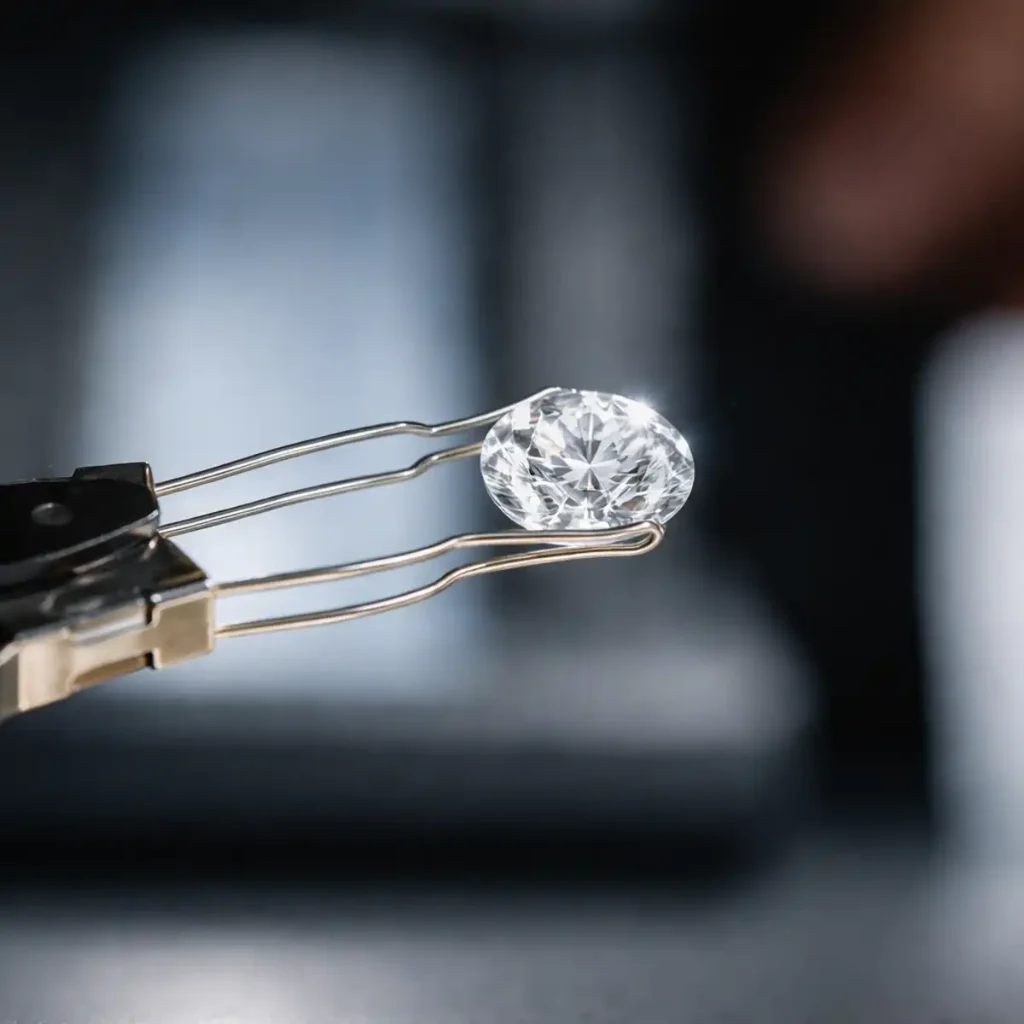
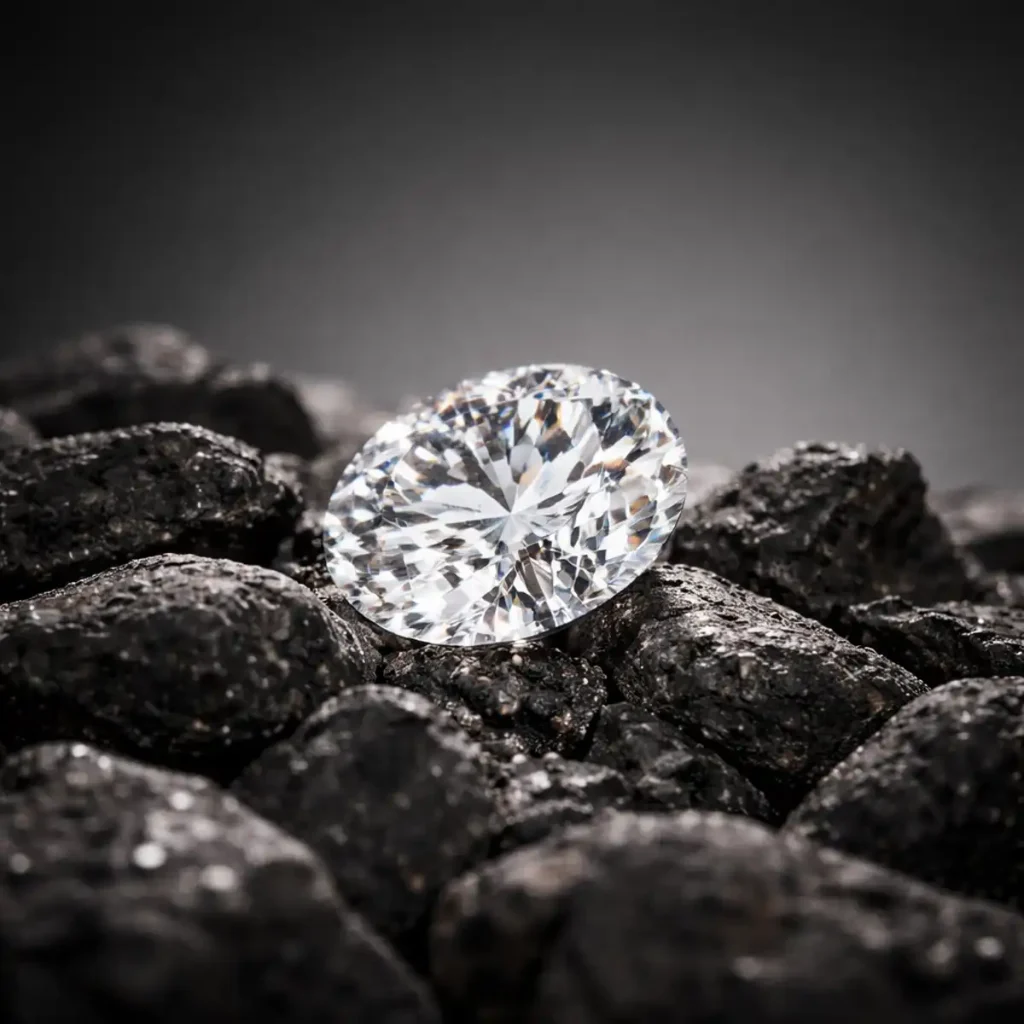
For a lab-grown diamond, the ethical case rests on different foundations. Lab-grown production avoids mining entirely, which removes the environmental and labour concerns associated with primary extraction. Some lab-grown producers certify their process under the Sustainability-Certified Diamond standard, which assesses energy sourcing, water usage, and emissions across the Chemical Vapour Deposition or High-Pressure High Temperature production cycle. Carbon-neutral lab-grown diamonds, produced using renewable energy and offset against residual emissions, are available from a limited number of producers and carry a modest premium over conventional lab-grown stones. Natural diamonds remain the default frame for most Hatton Garden bridal buyers, and the ethical case for lab-grown diamonds rests primarily on the avoidance of primary mining rather than on any claim of superior provenance.
For a coloured stone, the certification framework is different again. Sapphire, ruby, and emerald do not have an equivalent to the RJC or Fairtrade certifications for diamonds and gold. The ethical case for coloured stones rests on origin transparency and treatment disclosure, which is why the Gübelin, GRS, SSEF, and AGL laboratory reports discussed in the coloured stone buyer article matter for ethical buyers specifically. A Colombian emerald with a Gübelin report stating origin and treatment is a stone whose provenance is documented; a stone of unknown origin with no laboratory report is a stone whose ethical position cannot be verified.
Fun fact: The Fairtrade Gold standard was launched in 2011 and was the first certification to apply Fairtrade principles to a precious metal, with the UK becoming one of the earliest markets to adopt the standard following the launch, and Hatton Garden workshops featuring among the first London retailers to commission certified Fairtrade Gold pieces in the years immediately following.
How To Verify An Ethical Claim Before Committing
A certification is only as valuable as the verification behind it. The four steps that distinguish a substantively ethical purchase from a marketing-led one are straightforward in practice.
The first step is to ask the jeweller to produce the certification documentation in physical or digital form during the consultation. A genuine Fairtrade, Fairmined, or RJC member will have the certificates available and will share them without hesitation. A jeweller who refers to certifications in marketing language but cannot produce the documentation is relying on claims rather than verification.
The second step is to check the certification body’s public register. Fairtrade Foundation, Fairmined, and the Responsible Jewellery Council all maintain public lists of their current certified members. The buyer can confirm the jeweller’s current status independently within a few minutes, which is a reasonable step before committing to a purchase of this significance.
The third step is to ask for the certified material to be documented on the ring’s final paperwork, including the insurance valuation and the commission documentation. A Fairtrade Gold ring should have the Fairtrade mark alongside the UK hallmark on the piece itself and should be described as Fairtrade Gold on the valuation certificate, not as generic 18ct gold. A stone with origin certification should have the laboratory report number recorded on the paperwork so the ring and the certification remain linked for the life of the piece.
The fourth step is to understand the premium the certification adds and to accept it as a legitimate cost rather than negotiate against it. Fairtrade Gold typically adds 10% to 20% to the metal cost of a ring relative to conventional 18ct gold; Fairmined adds a similar premium; RJC-certified diamond supply chains add a modest premium depending on the retailer’s structure. These premiums fund the certification infrastructure and the standards it enforces. A buyer who wants the ethical position without paying the associated cost is asking for the marketing benefit without the underlying substance.
What A Hatton Garden Ethical Buyer Should Actually Do
The single most useful step an ethical buyer can take when approaching Hatton Garden is to identify 3 or 4 workshops holding specific relevant certifications before the first consultation, rather than walking the quarter and testing every workshop. The certified membership lists from Fairtrade Foundation, Fairmined, and the Responsible Jewellery Council are publicly accessible online, and filtering to London-based members produces a shortlist of Hatton Garden workshops that have committed to and been audited against the relevant standards. Starting the search with a certified list rather than a generic Hatton Garden walk-in narrows the conversation from the first moment and saves the buyer the diplomatic discomfort of asking uncertified jewellers about certifications they do not hold.
At the first consultation, ask the six questions set out above: where the metal came from, whether it is Fairtrade or Fairmined certified, what the recycled content is, if applicable; and for the stone, what the RJC or equivalent certification is, what the origin documentation shows, and what the treatment disclosure states. A jeweller who answers all six questions with documentation rather than reassurance is a jeweller worth commissioning with. Bespoke commissions in certified Hatton Garden workshops typically take 6 to 10 weeks from design approval to collection, with some additional time built in where specific certified materials need to be sourced rather than held in stock. Bring a clear budget that accommodates the certification premiums, specifically 10% to 20% above conventional material costs, and treat the premium as part of the purchase decision rather than a discretionary extra. The ring that results is one whose ethical position is documented and verifiable rather than claimed, and that documentation travels with the piece for the rest of its life.