
The question every first-time engagement ring buyer eventually asks is this. Why is a Hatton Garden diamond ring often a third cheaper than the same specification on the high street, and what exactly is being given up to get that price? The short answer is nothing of substance. The longer answer involves four structural factors that shape how the quarter in EC1N prices fine jewellery, and once those factors are understood, the pricing difference stops looking like a discount and starts looking like the absence of costs that never needed to be there in the first place.
Hatton Garden sits in a tight cluster between Chancery Lane station on the Central line and the Elizabeth line exit at Farringdon, with over 300 jewellery businesses trading within a few hundred metres of each other. That density is the first clue to the pricing logic. When a buyer walks from Greville Street to the northern end of Hatton Garden in 8 minutes and can compare stones across 20 workshops in an afternoon, the competitive pressure on every price tag is constant and immediate. No high-street retailer operates in that kind of pricing environment.
What Structural Pricing Actually Means In This Quarter
The phrase trade pricing gets used loosely in jewellery marketing. In Hatton Garden, it has a specific meaning that is worth separating from the generic version. The quarter operates what is effectively a compressed supply chain running from rough stone through cutting, polishing, dealing, setting, and finished retail, often within the same street and occasionally within the same building. When a buyer commissions an engagement ring from an independent Hatton Garden workshop, the stone dealer who supplies the centre stone may be two doors down, the setter may be on the floor above, and the hallmarking is done a short walk away at the London Assay Office in Goldsmiths’ Hall.
That compression removes intermediary margins at every stage. A high-street retailer typically buys finished rings from a wholesaler who bought from a manufacturer who bought the stone from a dealer who bought it from a cutter. Each of those steps adds a margin of between 15% and 30% in the fine jewellery trade. Hatton Garden’s structure collapses several of those steps into a single workshop relationship, and the customer sees the result on the invoice.
This is not a discount. It is the structural absence of costs that buyers on Bond Street or in chain retail are paying for without necessarily being aware of it.
Why Overheads In EC1N Are Lower Than On Bond Street Or In Chain Retail
Commercial rent is the first factor. Hatton Garden premises are typically upper-floor workshop spaces or discreet ground-floor showrooms in buildings that have served the jewellery trade since the Victorian period. A first-floor workshop on Greville Street carries a fraction of the rent per square foot of a flagship Bond Street showroom. That difference feeds directly through to the price of every piece produced or retailed from that address.
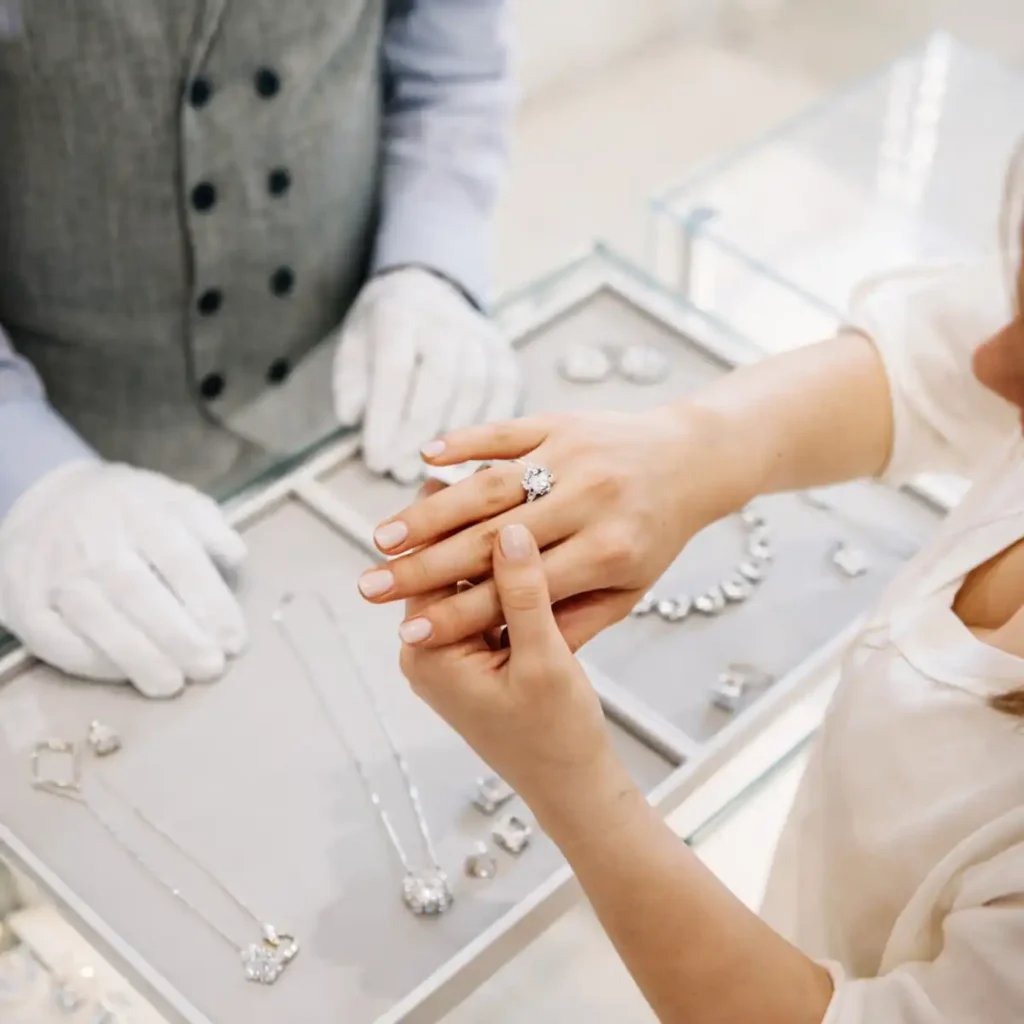
Staffing models differ structurally. A chain retailer on a high street employs commissioned sales staff who have little direct involvement in making or grading the jewellery they sell. A Hatton Garden independent typically has the owner, a gemmologist, and one or two bench jewellers all present in the same room during a buyer consultation. The person behind the counter is often the person who will cut or set the stone. The absence of a commissioned sales layer removes another cost from the final price and changes the quality of the buying conversation considerably.
Marketing spend is the third factor. A national jewellery brand runs television campaigns, sponsorship deals, and flagship store maintenance that are amortised across every ring sold. An independent Hatton Garden workshop reaches its buyers through word of mouth, the quarter’s long-established reputation, and the footfall that Farringdon and Chancery Lane stations deliver every weekday. Those channels cost a fraction of broadcast advertising, and the savings reach the buyer.
What The Wholesale Access Advantage Actually Looks Like
Wholesale pricing is the most misunderstood phrase in the quarter. It does not mean that Hatton Garden jewellers sell stones at wholesale prices. It means that they buy stones at wholesale prices, and the retail markup applied to those stones is smaller in absolute pound terms because the starting point is lower. When a Hatton Garden jeweller shows a buyer a 1-carat GIA-certified round brilliant with Excellent cut at a given price, the pricing ladder from rough stone to that finished ring has passed through fewer hands and absorbed fewer margins than the same specification on a chain retailer’s counter.
Several Hatton Garden firms are direct De Beers sightholders or work with sightholder partners, which means they have contractual access to rough diamond parcels that never reach general wholesale channels. Others maintain long-standing relationships with cutting centres in Antwerp, Mumbai, and Surat that allow them to commission specific stones rather than buy finished inventory. The buyer never sees these supply chains directly, but the pricing reflects them in every quote.
Fun fact: Over 300 jewellery businesses operate within a few hundred metres of each other in the EC1N postcode, representing the largest concentration of jewellery retailers in the UK, which is the competitive density that drives the pricing logic for every independent workshop in the quarter.
What About Certified Diamonds And Lab-Grown Alternatives
Natural diamond pricing in Hatton Garden follows the wholesale compression described above. A GIA-certified 1 carat D-colour VS1 stone priced in a Hatton Garden independent will typically sit meaningfully below the same specification at a chain retailer, and the certificate is identical because GIA grades the stone once and issues one report that travels with it, regardless of which retailer eventually sells the ring it is set in. The buyer pays less for the ring with the same stone.
Lab-grown diamonds operate in a different pricing frame entirely. The quarter has adapted to include lab-grown inventory alongside natural stones, typically certified by IGI rather than GIA. Lab-grown pricing has fallen substantially since 2020 as Chemical Vapour Deposition production has scaled, and many Hatton Garden jewellers now offer a 1.50 carat lab-grown stone at roughly the budget a buyer would previously have allocated to a 0.90 carat natural. The pricing advantage of lab-grown is even more pronounced than on natural, for reasons that reflect the industrial economics of production rather than the structural economics of the quarter. Natural diamonds remain the default frame for most Hatton Garden bridal buyers, and the secondary market value distinction between natural and lab-grown is a legitimate consideration that any honest Hatton Garden jeweller will raise during a consultation.
The Buying Protection Question Buyers Should Ask
The absence of a brand premium does not mean the absence of consumer protection. Hatton Garden independents operate under the same UK consumer law framework as chain retailers, specifically the Consumer Rights Act 2015 for in-person purchases and the Consumer Contracts Regulations 2013 for online purchases, including the 14-day cooling-off period. Every British-made piece sold above the hallmarking exemption weight must carry a UK hallmark under the Hallmarking Act 1973, which is a statutory guarantee of metal fineness that applies equally to a £2,000 ring from Hatton Garden and a £20,000 ring from any other retailer.
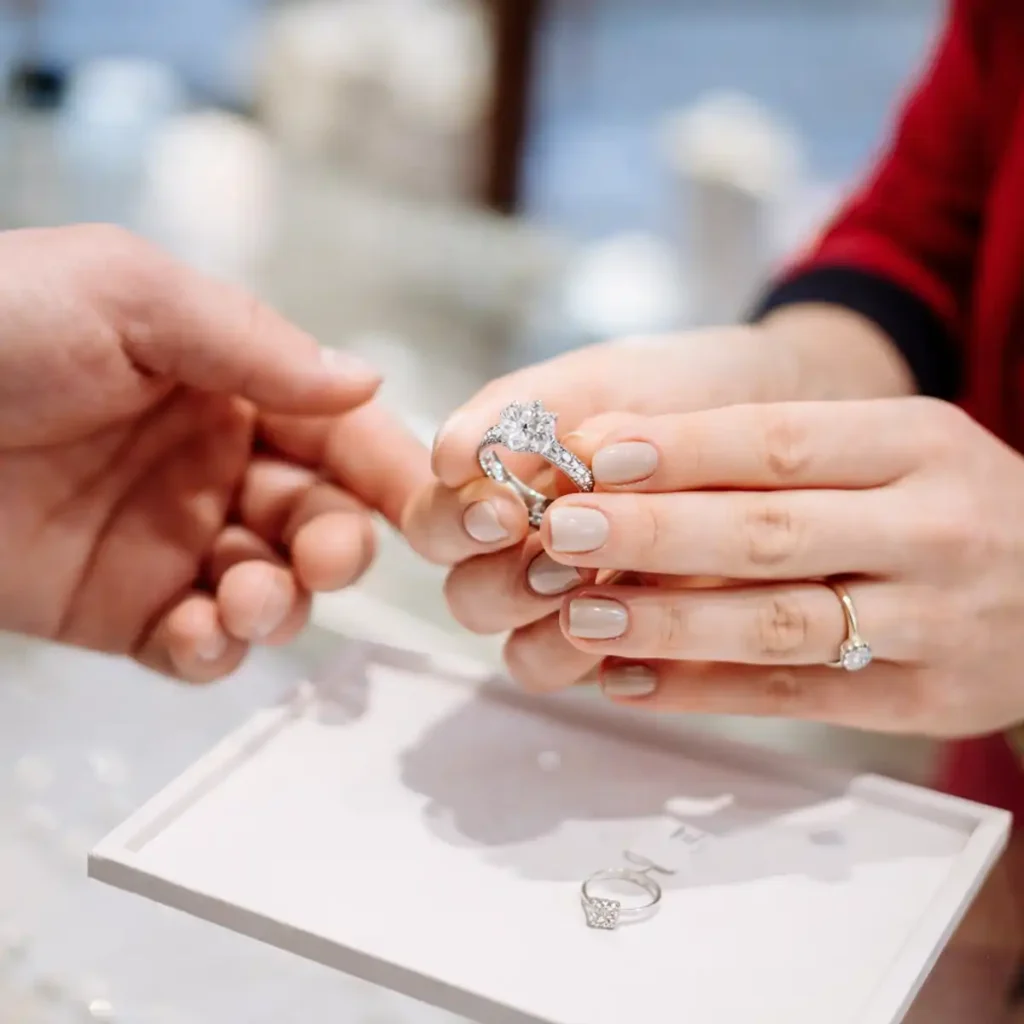
What does differ is the level of scrutiny the buyer can apply before committing. A chain retailer typically has one ring of a given specification in stock and a uniform price across stores. A Hatton Garden buyer can walk from one independent to the next, see the same specification with different setting work, ask to have the stone lifted from a setting and examined loose under the loupe, and request a written quote valid for a defined period. That process is not available in chain retail at any price point, and it is the quarter’s answer to the question of whether lower price means lower trust. It does not; it means a different structure for how trust is established.
What This Means For A Buyer Deciding Where To Look
The pricing difference between Hatton Garden and the high street is not a matter of negotiation or luck. It is the predictable result of a supply chain that runs shorter, an overhead structure that is lower, and a competitive density that keeps every quote honest. A buyer approaching an engagement ring purchase for the first time will find that the same budget delivers measurably more at a Hatton Garden independent than at a chain retailer, and that the quality of the conversation, the access to the bench, and the ability to commission bespoke work are part of what the price includes rather than extras to be negotiated separately. Start with 3 or 4 independent Hatton Garden workshops rather than a single visit. Book appointments rather than walking in during peak hours, particularly during engagement season between November and February. Ask every jeweller to show you stones loose before setting, and request a written quote that itemises the centre stone certification, metal specification, and hallmarking arrangement. Check that the valuation provided at handover is an independent insurance valuation rather than a copy of the purchase receipt. If a Hatton Garden independent can answer those questions clearly and in writing, the structural pricing advantage will translate into a ring that looks and lasts as well as anything at twice the price on Bond Street