
A sapphire engagement ring asks a buyer to think differently than a diamond ring does. The 4Cs framework that structures diamond assessment, with its standardised scales for colour, clarity, cut, and carat weight, does not transfer directly to coloured gemstones. Sapphire grading is more complex, more subjective in its vocabulary, and more dependent on the specific combination of hue, tone, and saturation than any single grade can capture.
This is not a disadvantage. It is an invitation to look more carefully, to understand what actually makes one sapphire significantly more valuable and visually compelling than another of the same weight, and to make a choice that reflects genuine knowledge rather than a printed grade. For buyers visiting Smith & Green Jewellers at 9 Hatton Garden EC1N, with a sapphire in mind, what follows is the analytical framework that makes that choice possible.
What Sapphire Actually Is
Sapphire is corundum, aluminium oxide in crystalline form, coloured by trace elements present during formation. Blue sapphire gets its colour from iron and titanium. The intensity and quality of that colour is the single most important determinant of value in blue sapphire, outweighing clarity, size, and origin in most commercial assessments. Pink sapphires are coloured by chromium. Yellow sapphires by iron. Padparadscha, the rare pinkish-orange variety named for the colour of a lotus flower, is coloured by a combination of both.
The corundum family includes ruby, which is simply red corundum. Sapphires exist in every colour except red, which has its own name. This distinction matters because it means the quality frameworks that apply to blue sapphire are broadly applicable across the coloured varieties, with the specific colour description adjusted accordingly.
Hardness is 9 on the Mohs scale, second only to diamond at 10. A sapphire engagement ring is highly suitable for daily wear. The stone will not scratch from typical environmental contact, and the risk of chipping, while real, is lower than with emerald and most other popular coloured gemstone alternatives.
Colour in Sapphire and How to Assess It
In blue sapphire, buyers encounter 3 independently variable colour dimensions: hue, tone, and saturation. Hue refers to the colour as it sits on the colour wheel: pure blue, violetish-blue, or greenish-blue. Tone refers to how light or dark the stone reads on a scale from nearly colourless to nearly black. Saturation refers to the intensity or purity of the colour, from muted and grey to vivid and clean.
The stones that command the highest prices are those where all 3 dimensions align: a pure blue hue (no green or grey secondary), a medium to medium-dark tone that is neither so light it appears washed out nor so dark it appears inky in certain light conditions, and a vivid saturation with no grey modifier. The term "cornflower blue," which appears in trade descriptions with considerable frequency, refers loosely to this combination rather than to a precisely measured grade.
The most important thing to know about assessing sapphire colour is that it must be done in multiple light conditions. A stone that appears intensely beautiful under incandescent light may appear darker and more inky under fluorescent or daylight. A stone that looks slightly pale in a showroom may come alive on the finger outdoors. Ask to view any sapphire you are seriously considering in natural light and under at least one artificial light source. Both reveal different things about the stone.
Heat Treatment and Its Effect on Value and Certification
The majority of sapphires on the commercial market have been heat-treated. Heating corundum to high temperatures dissolves silk (rutile inclusions), improves colour saturation, and clarifies the stone's appearance. The process is stable: a heat-treated sapphire does not revert to its pre-treatment state. It is broadly accepted in the trade and does not represent misrepresentation, provided it is disclosed.
An unheated sapphire of equivalent colour quality commands a significant premium over a heat-treated stone. The premium reflects rarity. Sapphires that emerge from the ground with strong, clean colour without any enhancement are uncommon, and collectors and serious buyers pay accordingly. For a buyer whose priority is visual beauty rather than provenance and rarity premiums, a high-quality heat-treated stone will often deliver better colour at a given price point than a no-treatment stone of lesser natural colour.
The grading report from a recognised laboratory will state the heat treatment status explicitly. GIA and Gübelin both issue reports for sapphires that include origin determination and treatment disclosure. An unheated declaration from either carries substantial weight. IGI issues reports for coloured stones with treatment disclosure as a standard element.
Origin and What It Means for Sapphire Value
Sapphire origin matters commercially in a way that has no direct parallel in diamond grading. The geological characteristics of specific mining regions produce sapphires with identifiable optical and chemical signatures, and certain origins command premiums based on historical reputation for particular colour qualities.
Kashmir, producing sapphires from the Paddar region of northern India in the late 19th and early 20th centuries, remains the benchmark for blue sapphire value. Kashmir stones of exceptional quality are among the most valuable coloured gemstones per carat in the world. The origin is confirmed by gemmological examination of inclusions and chemical fingerprint, and a confirmed Kashmir origin on a laboratory report for a fine stone adds substantial documented value.
Ceylon (now Sri Lanka) produces sapphires across a wide colour range from the Ratnapura and Elahera regions. Ceylonese sapphires are known for vivid secondary fluorescence and often display a characteristic silky inclusion pattern. They tend toward lighter tones than Australian or Thai material and, at their best, produce a lively, cornflower-adjacent blue that is highly sought for engagement ring use.
Myanmar (Burma) and Madagascar are significant producing countries with good representation across commercial quality ranges. Madagascar has become one of the largest sapphire sources in recent decades, producing stones from light pastel to deep royal blue across its multiple deposits.
For a sapphire engagement ring buyer, the practical guidance on origin is this: a stone of outstanding colour from any origin is more valuable than a stone of mediocre colour from a famous one. Origin adds a premium on top of quality, not in place of it.
Choosing the Sapphire Shape and What Suits the Stone
Sapphire is frequently cut in oval, cushion, round brilliant, and emerald cut forms. The traditional step cuts, emerald and asscher, suit sapphires beautifully because they prioritise colour display over brilliance, allowing the saturation of the stone to read cleanly without the complex light scattering of a brilliant cut. A fine deep-blue sapphire in an emerald cut is striking in a way that is entirely different from a brilliant-cut stone of the same colour.
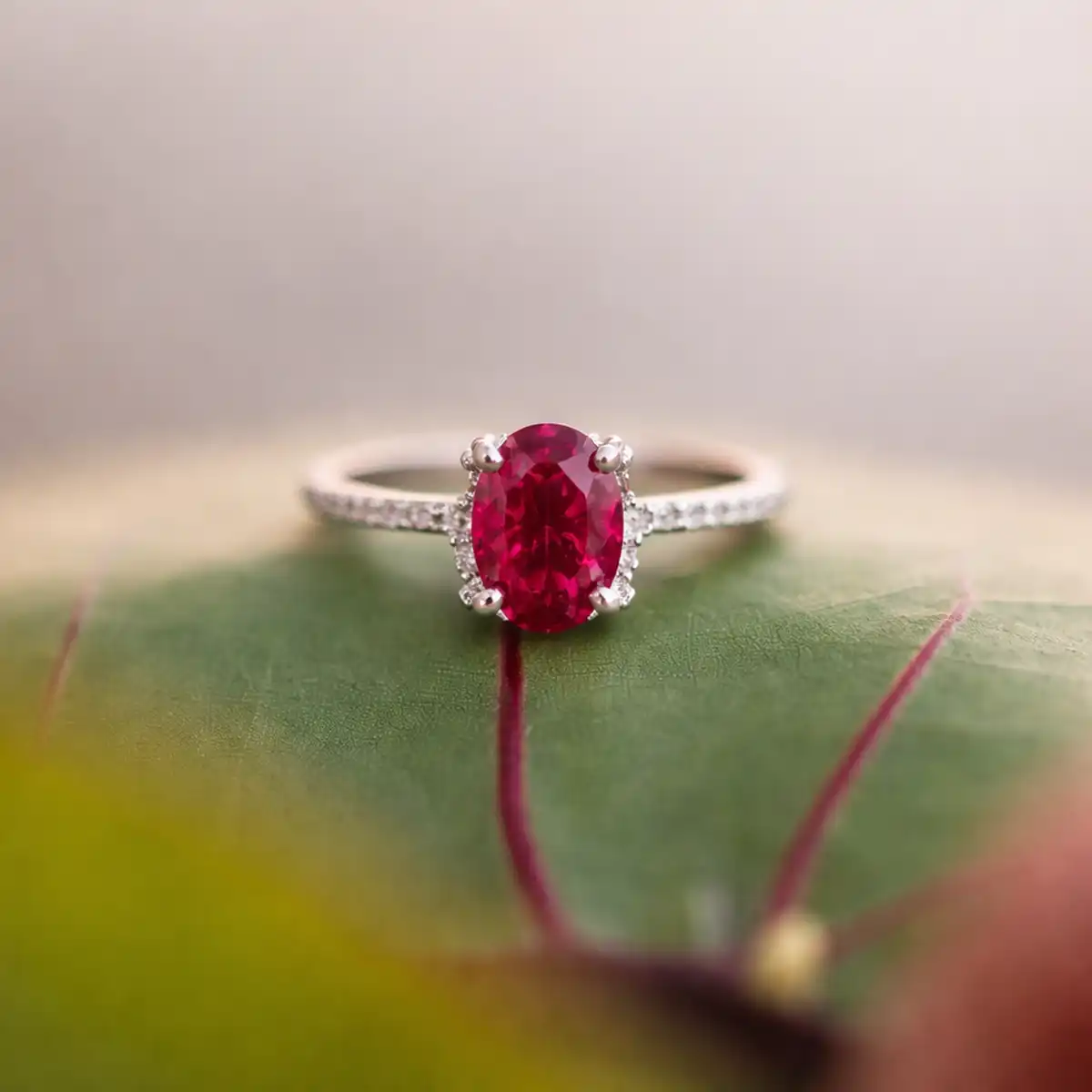
Oval cuts have dominated the sapphire engagement ring market for decades, partly due to the influence of highly publicised sapphire rings. The oval shape elongates the visual appearance of the stone on the finger and tends to face up larger than a round brilliant of the same carat weight, making it commercially effective for buyers who want visual impact at a controlled weight and therefore a controlled price.
Cushion cuts occupy a similar positioning to oval in terms of face-up area relative to weight, with a softer, more pillowed outline that suits vintage aesthetic preferences.
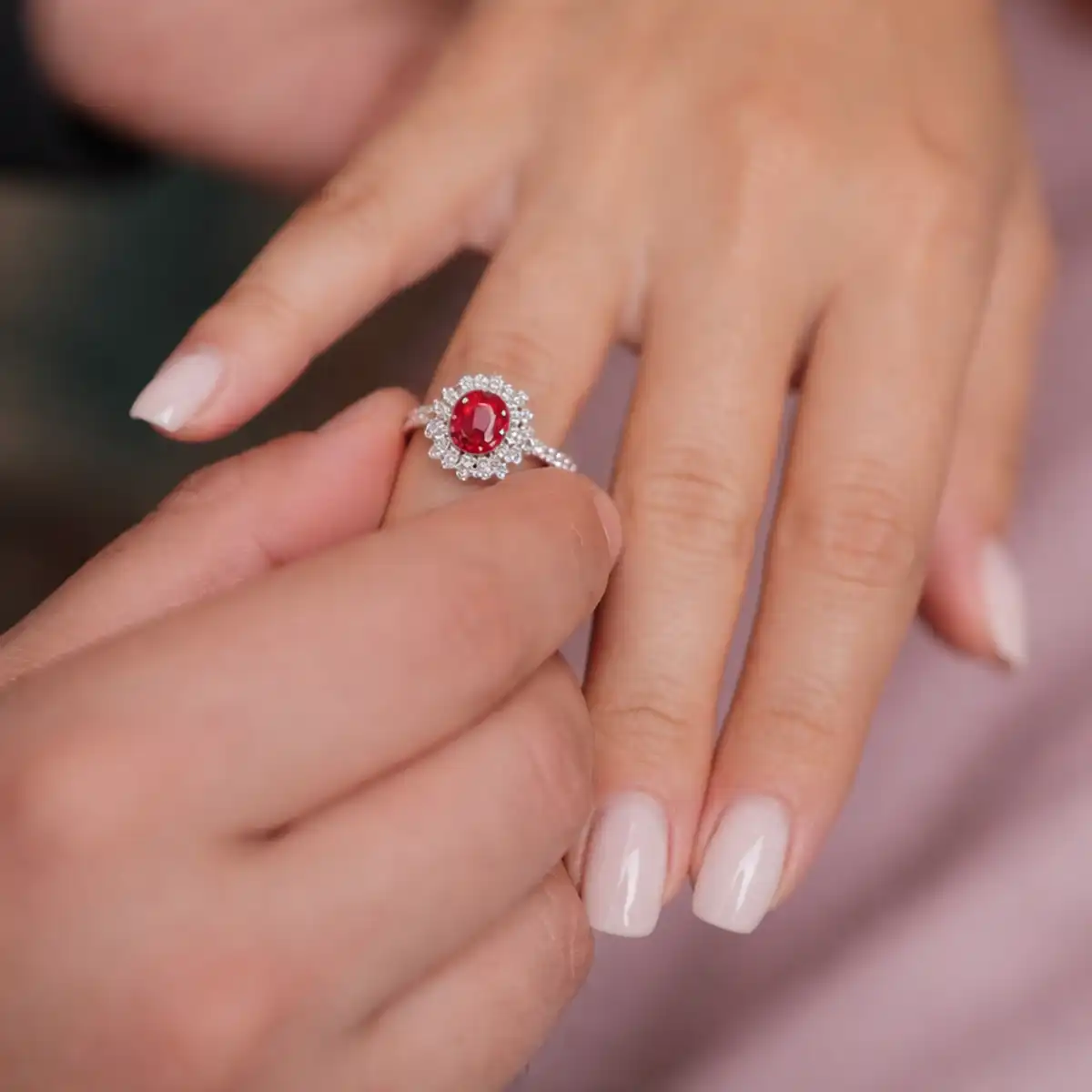
Fun fact: The sapphire set in the engagement ring given to Diana, Princess of Wales, in 1981 was a 12-carat oval Ceylonese blue sapphire surrounded by 14 diamonds, mounted in 18ct white gold — the same ring, now on the finger of the Princess of Wales, that is widely credited with triggering a generation of sapphire engagement ring interest each time it appears in public.
Buying a Sapphire Confidently
Before committing to a sapphire engagement ring, confirm 4 things. The stone comes with a laboratory report disclosing heat treatment status that you have viewed the stone in both natural daylight and artificial light. That the colour reads as you want it to in the setting metal you have chosen (blue sapphire in white metal reads differently than in yellow gold, where the warm surround enriches cool blues). And that the setting style protects the stone's most vulnerable points.
At Smith & Green Jewellers at 9 Hatton Garden, the sapphire selection available for bespoke commissions spans a range of origins, colours, and grades. The conversation starts with what you want the ring to look like on the finger, and the stone selection follows from there. Walk in along Greville Street from Farringdon station with your colour preference and budget in mind, and leave knowing exactly what you have chosen and precisely why.