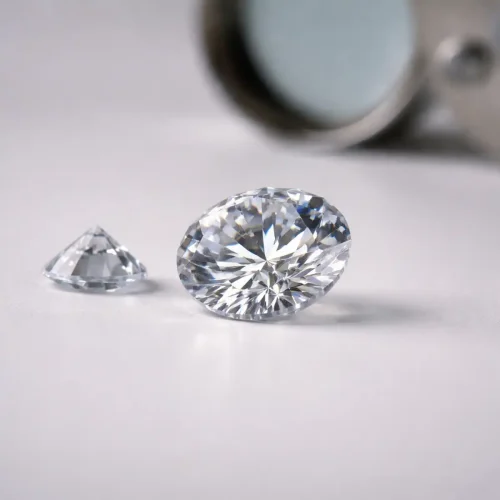
The three coloured stones that matter for engagement rings at serious specification are sapphire, ruby, and emerald, and each operates on a different pricing logic that a buyer needs to understand before walking into a Hatton Garden consultation. A 2-carat sapphire and a 2-carat emerald at comparable clarity grades will not cost remotely the same amount, and the reason has almost nothing to do with the stones themselves and almost everything to do with where they came from, how they were treated, and which laboratory certified them. Once those three variables are understood, the coloured stone market becomes legible rather than opaque, and the buyer can assess value in the same practical terms they already apply to diamonds.
Hatton Garden in EC1N, between Chancery Lane on the Central line and Farringdon on the Elizabeth line, is the deepest coloured stone market in the UK outside the auction trade. Dealers on Greville Street and along the northern end of Hatton Garden carry loose sapphires, rubies, and emeralds alongside their diamond inventory, typically in separate stock books organised by origin and size. The Sapphire Shop on the main Hatton Garden street has specialised in sapphire jewellery for over 30 years. Holts Gems at 39 Greville Street has traded in coloured stones since 1948. Rennie and Co maintains a 65-year history in coloured gemstone work. The quarter’s specialisation is real, and for a buyer considering a coloured gemstone engagement ring,g the depth of local expertise is the structural reason to shop the quarter rather than source remotely.
Why Origin Matters More For Coloured Stones Than For Diamonds
Diamond value is largely determined by the 4Cs, because diamonds from different sources are broadly comparable at equivalent grades. Coloured stone value is determined by origin as much as by size or clarity, because different geological sources produce measurably different colour and tonal qualities that the trade has priced for over a century. A buyer who does not understand origin is operating without one of the two most important variables in coloured stone pricing.
Kashmir sapphires from the brief mining period in the late 19th century are the benchmark for sapphire colour, producing a velvety cornflower blue that no other source matches. Active Kashmir production ended effectively in the 1930s, and stones with reliable Kashmir provenance now appear primarily in estate jewellery and auction sales. The premium over comparable sapphires from other sources is substantial and reflects rarity rather than any single optical property.
Ceylon sapphires from Sri Lanka represent the working benchmark for modern commercial sapphire, producing the classic medium-blue to royal-blue colours that dominate current engagement ring inventory. Ceylon sapphires trade at a premium to sapphires from other active producing regions and are the source most Hatton Garden jewellers will show a buyer considering a serious sapphire purchase.
Burmese sapphires from Myanmar produce deeply saturated blues that can rival Kashmir at the top end, though the import restrictions around Burmese stones have complicated the trade and stones with pre-restriction provenance now command an additional premium as a result.
For Ruby, the origin hierarchy is similar but steeper. Burmese rubies from the Mogok valley produce the pigeon’s blood red that defines the category, and an unheated Burmese ruby above 2 carats with strong colour and good clarity can trade at prices per carat that exceed a comparable diamond by a significant multiple. Thai rubies produce darker, brownish-red tones that trade at meaningful discounts to Burmese. Mozambique has emerged in the last 15 years as a producer of rubies that approach Burmese quality at the top end, and stones from this source now represent a substantial share of the current commercial ruby market at specifications most buyers encounter.
For emerald, Colombia is the benchmark origin, producing the bluish-green colour with the specific optical character that has defined the category since the Spanish colonial period. Muzo, Chivor, and Coscuez are the three mining regions that collectively supply the Colombian market, and stones with confirmed Colombian origin command a substantial premium over emeralds from other sources. Zambian emeralds produce a cooler, deeper green that some buyers prefer for its saturation; Zambian stones trade at a meaningful discount to Colombian stones at comparable specifications. Brazilian and Ethiopian emeralds appear in the market at still lower price bands.
Why Treatment Disclosure Changes The Price Fundamentally
Almost every sapphire, ruby, and emerald sold in the modern market has been treated to improve colour, clarity, or both. The treatments are long-established trade practices, and treated stones are not counterfeit or misrepresented; they are simply a different category of stone than untreated ones, and they are priced differently.
Heat treatment is the standard for sapphire and ruby. Stones are heated to temperatures between 1,200 and 1,800 degrees Celsius in controlled conditions to dissolve inclusions and intensify colour. Heat treatment is permanent and widely accepted; a heated Ceylon sapphire with good colour at 2 carats trades at established commercial prices and represents reasonable value for a mainstream buyer. Unheated stones from the same source trade at a substantial premium, often 2 to 4 times the heated price, because unheated stones in good colour are genuinely rare and the premium reflects that scarcity. A buyer considering a sapphire or ruby should always ask whether the stone has been heat-treated; a reputable dealer will disclose this as a matter of course.
Oiling is the standard treatment for emerald. Virtually all commercial emeralds have been treated with clear oil or resin to fill surface-reaching fissures, improving clarity and colour saturation. The trade grades oiling from minor through moderate to significant, and the grading appears on certificates from reputable labs. Oiled emeralds require careful aftercare, as ultrasonic cleaning can remove the oil and expose the original fissures. A buyer should ask the degree of oiling disclosed on the certificate and understand that re-oiling may be needed periodically over the life of the piece.
Beryllium treatment and lead glass filling are more aggressive treatments that substantially reduce stone value and should be disclosed explicitly. Beryllium-treated sapphires can produce a dramatic colour change from near-colourless rough to vivid padparadscha-like orange, and the treatment permanently alters the stone chemistry. Lead glass filling is used on low-grade ruby to improve apparent clarity, but the filling is visible under magnification, and the stones require substantial aftercare. Any Hatton Garden dealer showing a ruby or sapphire should be asked whether these treatments have been applied, and the answer should appear on the certificate.
Fun fact: The Gübelin laboratory in Lucerne was founded in 1923 and developed many of the origin determination techniques the coloured stone trade now treats as standard, including the spectroscopic analysis of trace elements that allows a Kashmir sapphire to be distinguished from a Ceylon sapphire with high confidence more than a century after the original mine closed.

Which Certification Labs Actually Matter For Coloured Stones
GIA and IGI, which dominate diamond certification, do not lead the coloured stone market. The four laboratories that serious Hatton Garden dealers rely on for coloured stones are Gübelin, GRS (Gem Research Swisslab), SSEF (Swiss Gemmological Institute), and AGL (American Gemological Laboratories). These four labs set the benchmarks for origin determination and treatment disclosure on the stones that define the upper commercial and investment-grade market.
Gübelin and SSEF, both Swiss-based, lead the trade for high-value sapphire, ruby, and emerald, particularly at the top end where origin certification can add 25% to 50% to a stone’s value. GRS operates from Switzerland and Thailand and covers similar ground with a reputation for strong colour origin reporting. AGL is the US-based equivalent with particular strength in coloured stone grading and treatment identification.
For a Hatton Garden buyer considering a coloured stone engagement ring above roughly £3,000 centre stone value, an origin report from one of these four labs is appropriate and expected. Below that threshold, a grading report from a competent local laboratory may be sufficient, and the pricing premium for a premium-lab report may exceed the value it adds. A trade dealer will generally recommend lab certification proportionate to the value of the stone rather than applying a blanket standard across all price bands.
What Each Stone Actually Suits
Sapphire is the most practical of the three for everyday engagement ring wear. Sapphire’s hardness at 9 on the Mohs scale is exceeded only by diamond, which means a sapphire engagement ring can be worn daily for decades without measurable wear to the stone surface. Sapphire also offers the widest colour range of the three, from classic blue through pink, yellow, green, teal, padparadscha, and parti colour varieties, giving buyers considerable design latitude. The sapphire’s practical durability makes it the sensible alternative to diamond for buyers who want colour without compromising wear characteristics.
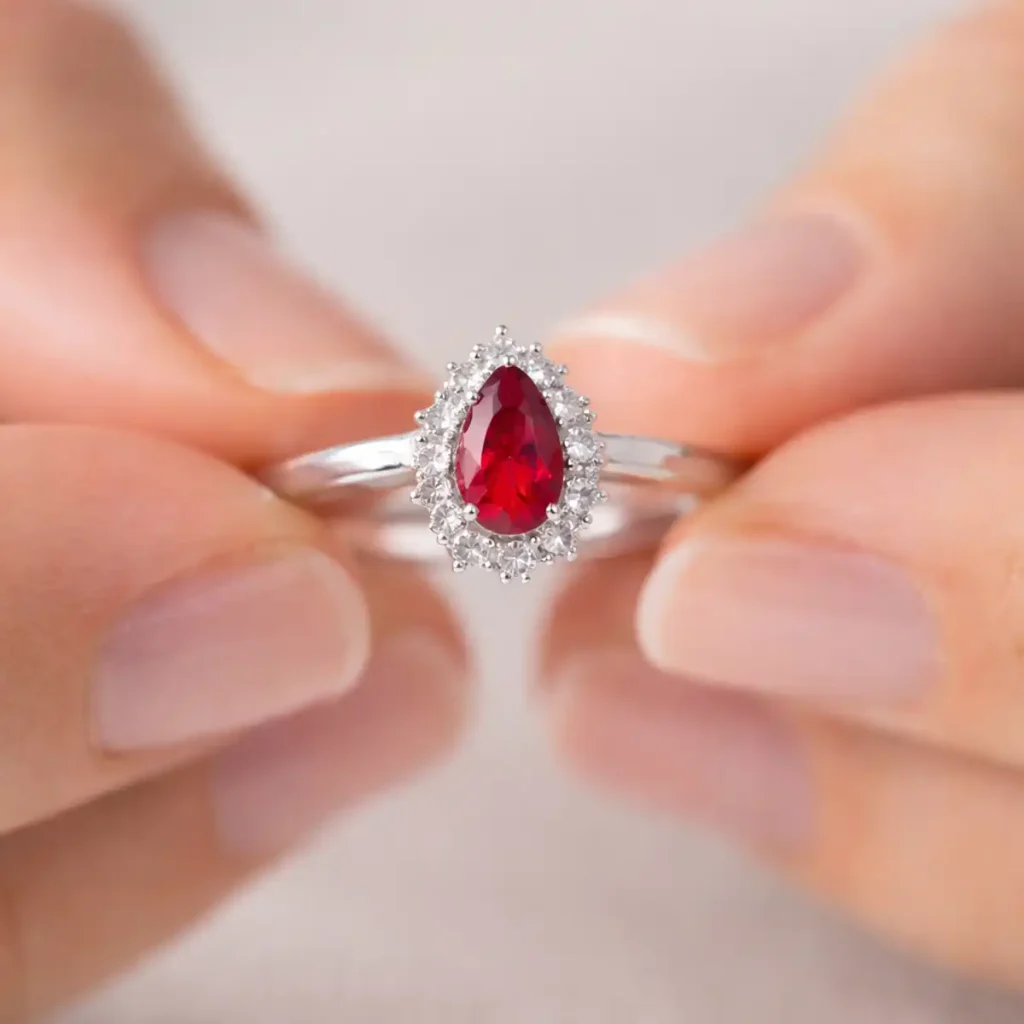
Ruby carries the strongest symbolism of the three stones in Western jewellery tradition and the richest colour at the top end. Ruby hardness is also 9 on the Mohs scale, which makes ruby engagement rings practical for daily wear. The premium pricing on Burmese and high-grade Mozambique rubies places fine ruby engagement rings at the upper end of coloured stone commissions, and buyers considering ruby should budget accordingly.
Emerald is the most aesthetically distinctive of the three and the least practical for daily wear. Emerald hardness at 7.5 to 8 on the Mohs scale is meaningfully lower than sapphire or ruby, and emerald’s natural inclusions, known in the trade as jardin, make the stones more vulnerable to impact damage. An emerald engagement ring should be set with protective claws or a bezel setting rather than an exposed prong arrangement, and the wearer should accept that the stone will need periodic aftercare and possibly re-oiling over its lifetime. For buyers who accept these considerations, the visual character of a fine Colombian emerald is genuinely distinctive.
What To Ask A Hatton Garden Coloured Stone Dealer
The single most useful question to ask any Hatton Garden dealer showing a coloured stone is this. What is the origin, what treatment has been applied, and which laboratory certifies both? The question sounds simple and should produce a simple answer, and the dealer’s response reveals almost everything a buyer needs to know about the stone being offered. A stone with an origin report from Gübelin, SSEF, GRS, or AGL, with treatment clearly disclosed on the certificate, and with a dealer who presents both documents without hesitation, is a stone that has been sold appropriately. A stone where any of those three pieces of information is missing or evasive is a stone where the buyer should either walk away or demand the missing certification before proceeding.
Beyond the paperwork, view every stone loose under daylight-balanced lighting, not under the warm showroom lighting that flatters weak colour. Compare stones of comparable specification side by side rather than sequentially, which trains the eye to distinguish colour and tonal qualities that reports describe only approximately. Bring the question of hallmark and setting to the dealer before committing to the stone, since setting a coloured stone requires different skills than setting a diamond and the setter’s experience with the specific stone type matters. Expect commissioned coloured stone engagement rings to take 6 to 10 weeks from stone selection to finished piece in Hatton Garden, with Colombian emeralds and specific origin sapphires potentially extending that range, where the stone must be sourced to order.