
The plain four-claw solitaire is no longer the default answer, and the evidence for that comes from three directions at once. Australian trade title Jewellery World reports that individuality is replacing uniformity in bridal jewellery, with couples marrying later and spending more. A Toronto bespoke studio, Solitaire x Alex Armen, names personalisation as the single strongest theme across eighteen months of client enquiries. And in London, Daniel Salimov of Regal Hatton Garden jewellers tells The Jewellery Editor that 80% of the firm's engagement ring sales are now made to bespoke.
What follows sets out which cuts and structures are actually being asked for, what the published figures do and do not prove, and which UK workshops hold the skills these designs require. Several of the strongest trend claims below come from jewellers describing their own order books, and each is attributed.
What the shift away from the solitaire actually means
Buyers are not rejecting the solitaire outright. They are rejecting the identical solitaire. Jewellery World's 2026 assessment puts it precisely, saying the customer does not want everyone else's solitaire, and that the commercial opportunity for independents lies in customisation rather than in a choice between traditional and contemporary bridal. The same piece points to Vogue's 2026 engagement ring forecast as evidence of movement away from highly replicated social media styles towards antique stones, distinctive settings and elongated shapes.
Two of the strongest signals in the reporting concern money and time rather than taste. Easy Weddings data cited by Jewellery World put the average Australian engagement ring at 6,842 Australian dollars in its 2026 figures, a 14.5% increase on the previous set, against an average total wedding cost of 38,252 Australian dollars. Couples marrying later, with more settled incomes, buy differently from couples marrying at 23. If you are starting your own search, the antique-leaning end of the market is a useful place to calibrate what character actually looks like, and London Victorian Ring Co. at 100 Hatton Garden is one of the district's long-standing points of reference for period work.
Which cuts are gaining ground, and what each one is for
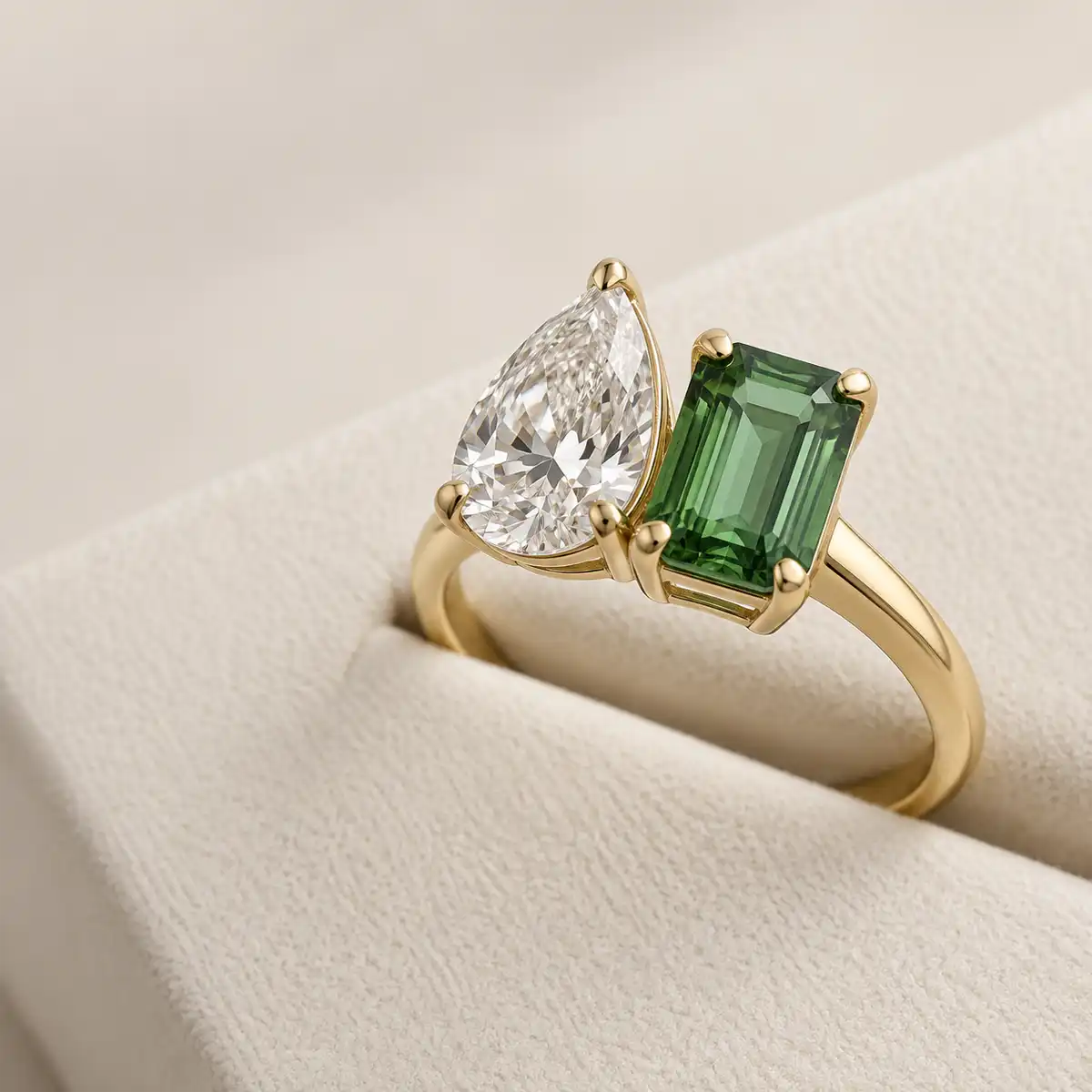
Set an oval against an emerald cut and the difference is not prettiness, it is purpose. Regal Hatton Garden's commentary in The Jewellery Editor describes oval-cut diamonds as among the most sought-after shapes for their finger coverage, while the emerald cut is chosen for an understated look, its elongated outline and step-cut facets reading as restraint rather than fire. The marquise is a third proposition again. Jewellery World describes it as giving the elongated appearance buyers found in ovals but with a sharper, more individual silhouette, its pointed ends providing considerable coverage along the finger.
The Canadian report reaches the same conclusion from a different dataset, listing oval, elongated cushion, radiant, pear, marquise and emerald cuts as the shapes dominating engagement ring discussions, with clients citing balance of elegance, finger coverage and modern appeal. Round brilliants have not gone anywhere. Solitaire x Alex Armen's own forecast for 2027 still opens with natural round brilliant solitaires.
Antique material is the quieter half of the story. Jewellery World identifies Old Mine cuts, antique cushions and stones with distinctive proportions and facet patterns as gaining attention from buyers who want something that feels less mass-produced, and notes that new designs inspired by historical stones are participating in the same movement. Those stones behave differently under a shop light than a modern brilliant does, which is exactly why a counter conversation matters more here than a screenshot. Bristol specialist AHLQ Antique & Vintage Jewellery works in genuinely preloved and antique pieces, selling online with free UK shipping, which is a different buying route from commissioning a new ring around an old-cut stone.
Multi-stone designs, mainstream or still niche
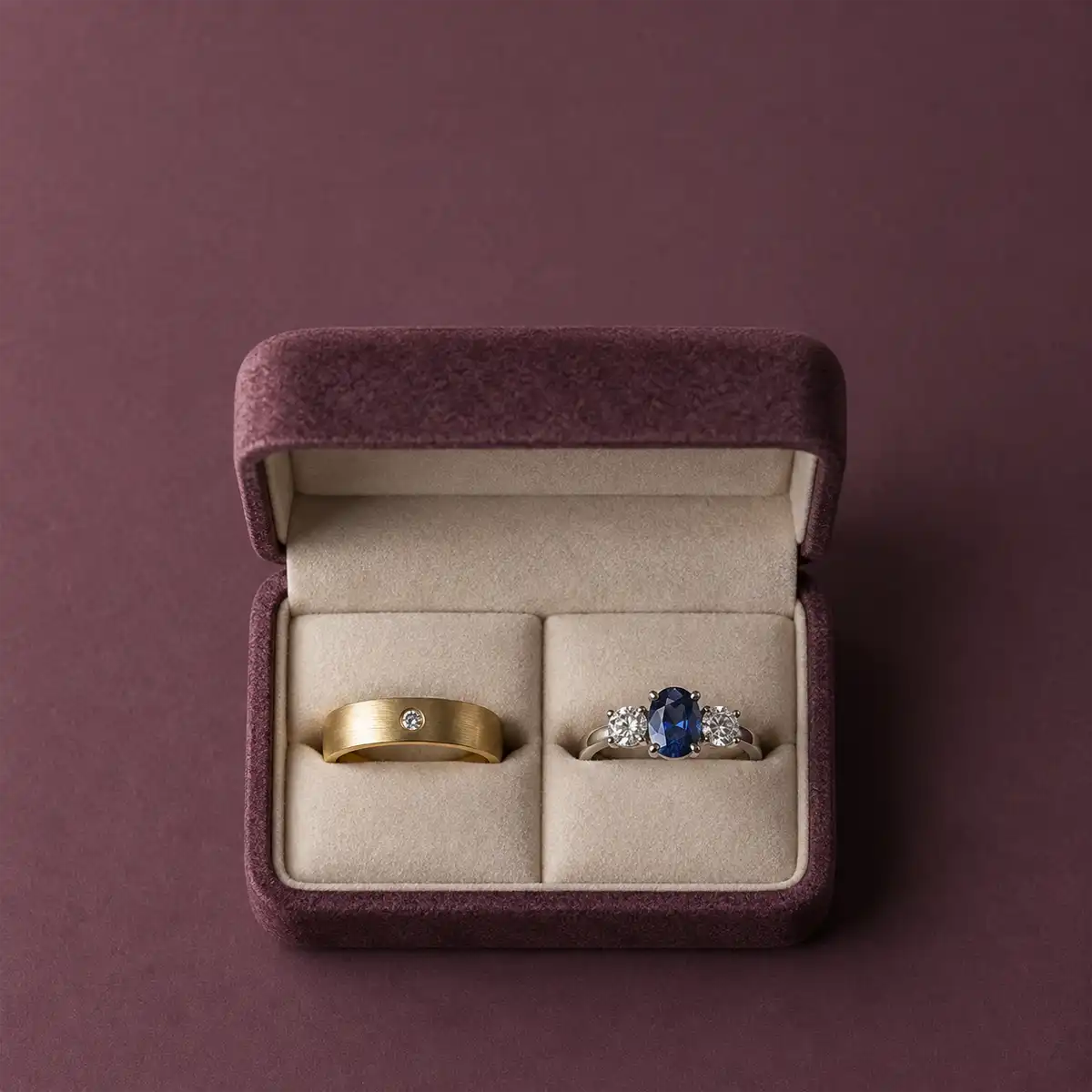
Three-stone rings appear in the Canadian study twice, once among popular lab-grown diamond requests and again in the forecast list of Canada's most requested 2027 styles. That is stronger evidence of a settled category than of a novelty. The toi et moi, two stones brought together in one design, is treated by The Jewellery Editor as a recognised style with a clear symbolic reading of two individuals and their shared journey, and the same studio in Toronto features a toi et moi engagement ring among its custom bridal work.
Multi-stone engagement rings therefore sit somewhere between emerging and established, depending on which market you measure. No UK share-of-sales figure has been published for them, so the fairer description is a growing category rather than a proven mainstream one. Hidden halo settings, by contrast, appear in the Canadian report both as a popular request and as a forecast top style, and Regal's UK commentary lists hidden halos and engraving among the small details couples use to make a familiar style their own.
Settings, metal and the bezel revival
A bezel does two jobs at once. It draws a clean metal outline around the stone and it protects the girdle, which is the widest edge of a cut stone and the part most exposed to knocks. Jewellery World identifies bezels as one of the defining setting directions in contemporary bridal, notes that the appeal is both aesthetic and practical, and observes that yellow gold strengthens the effect by introducing a visible frame around the centre stone. Turned sideways, the same shapes change character again: the publication describes east-west settings, where emerald, oval, marquise and elongated cushion stones are set horizontally, as transforming an otherwise conventional solitaire.
Yellow gold is the metal the Canadian data pushes hardest. Solitaire x Alex Armen reports it as the most frequently requested metal across bridal and fine jewellery commissions, with clients citing warmth and heirloom quality, while white gold and platinum remain important. Carat, in this context, describes gold fineness rather than stone weight, and a UK hallmark from an Assay Office certifies that fineness. It does not certify the quality of the setting work, the security of the stone or the accuracy of any grading report supplied with it. Those are separate questions to ask at the counter.
How to run the commission, and who does this work
A bespoke ring runs in a sequence, and knowing the order prevents expensive reversals. The budget conversation comes first, but Jewellery World argues it should be reframed, replacing what is your budget with what matters most to you within your budget, because a buyer prioritising size will make different compromises from one committed to a natural diamond. Then comes the centre stone, then the setting, then the band, then the wedding ring. On that last point the Canadian report is emphatic, finding that many couples now design engagement ring and wedding band simultaneously to ensure proper fit and visual harmony, with matching men's and women's bands requested consistently.
The stone decision increasingly includes origin. Laboratory-grown diamonds have the same chemical composition and physical properties as natural diamonds, differing in how they are formed, and Regal Hatton Garden reports that around 70% of its engagement ring customers currently choose lab-grown diamonds, many in order to take a larger or higher-specification stone within the same budget. The Canadian study reaches a compatible finding, with enquiries for lab-grown diamonds between three and four carats, while natural stones continue to attract buyers prioritising rarity and provenance.
For the making itself, the Hatton Garden bench is unusually concentrated. Simon Lewis Bespoke Jewellery has run a bespoke workshop at 62 Hatton Garden for over three decades, and Hearts of London jewellers at 29 Greville Street has worked in bespoke engagement rings for over 20 years. Arlington and Co. at 11 Hatton Garden, Jade Jewellers at 104 Hatton Garden, Solitaire at 8 Hatton Garden, Jules Diamonds on Greville Street and The Diamond Ring Company at Suite 124, 100 Hatton Garden cover the manufacturing and diamond-dealing side of the same few streets. Rebus Signet Rings, on Leather Lane in Holborn, works in signet rings, the skill set behind engraved detail and family symbols.
What to settle before you spend
Decide the priority before the shape. Size, natural origin, cut quality, colour, design or provenance, because as Jewellery World argues, the compromise you accept follows directly from that ranking. Ask which certificate house graded the centre stone and see the report, not a summary of it. If the stone is laboratory-grown, get that stated in writing on the invoice. Check the hallmark and understand that it speaks to metal fineness alone. Ask how the setting will sit against a wedding band before the band is designed, since the Canadian findings suggest couples who plan both together avoid the fit problems. And if an antique or old-cut stone is in play, look at it on a hand under ordinary light rather than in a photograph. Sentimental value, insurance replacement value and resale value are three different numbers, and retail jewellery generally resells well below its purchase price.